Secrets of the Gorse ~ Ohn
Gorse (Ulex europaeus)
Volume 17 of 31
Bruce Clifton
Gorse – (Ohn)
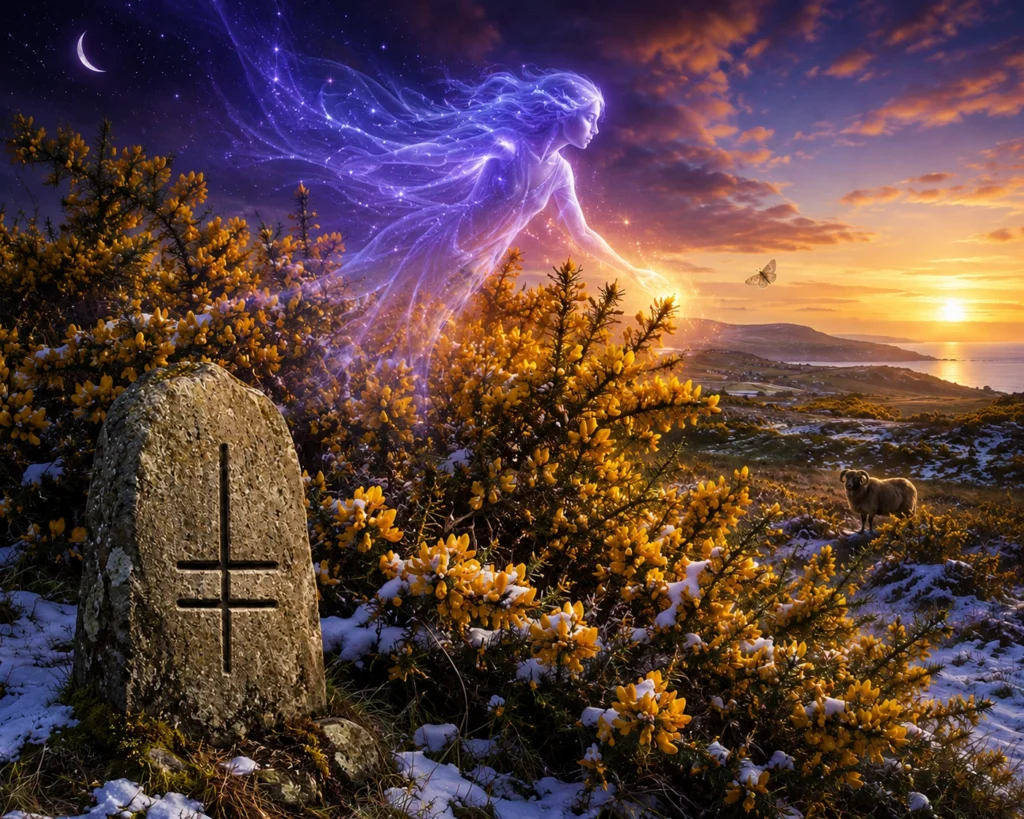
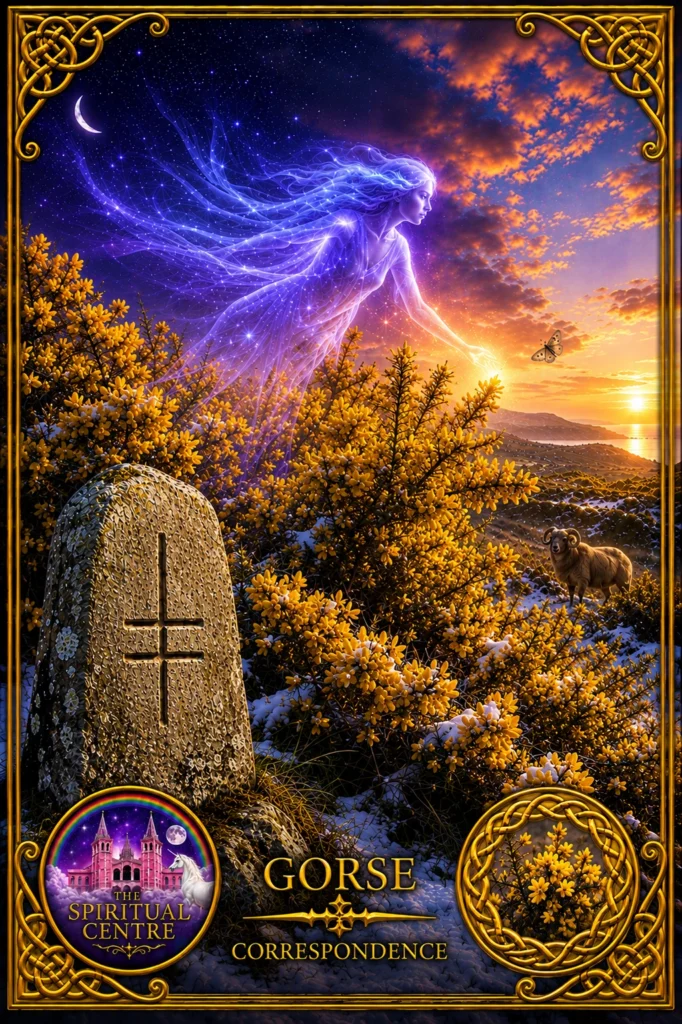
There are places where the land seems reluctant to surrender anything. Windswept hills, forgotten tracks, open moorland and ragged edges where the soil is thin and the weather arrives unhindered. Yet across these places grows Gorse, carrying such an abundance of gold that for a few extraordinary weeks the landscape appears to have captured the sun.
The Celts knew this plant as more than decoration upon the heath. Within the Ogham Tree Lore, Gorse is Ohn, the Chieftain, a presence of Fire whose character seems perfectly expressed by the contradiction of its form. Approach carelessly and there are thorns. Look again and there are flowers. Venture closer still and an unexpectedly sweet fragrance rises from them. Gorse does not reveal everything at first encounter.
Perhaps that is where its secrets begin.
For generations people lived beside Gorse, gathering from it, working with it and weaving it into the seasonal and spiritual life of the land. Stories gathered around the places where it grew. Old customs followed its seasons. Animals found sanctuary within it, while gods, spiritual beings and the turning festivals of the Celtic year gradually became part of its greater correspondence.
There is something wonderfully contradictory about Ohn. It establishes boundaries yet shelters life. It carries thorns yet speaks of joy. It belongs to the earth yet expresses Fire. It stands firmly within physical reality while its folklore continually wanders towards dreams, spirit and the Otherworld. Even its golden flowering seems extravagant for a plant that asks so little from the ground beneath it.
To discover the Secrets of the Gorse is therefore to travel beyond the familiar yellow bush upon the hillside. Behind those thorns lies an older landscape of Ogham and healing, animal spirit and folklore, gods and spiritual peoples, ancient festivals and Secret Harmonies.
And perhaps that is the first teaching of Ohn: never mistake the boundary for everything that lies beyond it.
Gorse – Ogham Tree Profile
Bruce Clifton
Name: Gorse (Furze)
Ogham: Ohn – On ~ Ohn-er ~ Onner
Letter: O
Lunar: New Moon
Season: Winter / Spring
Element: Fire
Direction: North
Moon Phase: Last Quarter
Moon Name: of the Spring Equinox
Influence: Masculine
Title: Chieftain
Age: 1 Generation
Aura: Yellow
Healing: Arthritis ~ Asthma ~ Blood ~ Colds ~ Coughs ~ Diarrhoea ~ Jaundice ~ Kidney ~ Kidney Stones ~ Liver
Animal Spirit: Dragon (Fire) ~ Hedgehog ~ Moth ~ Ram
Totems and Entities: ArchAngel Michael ~ Hedge Witch ~ Na Daoine Sithe ~ Queen Mab ~ Tylwyth Teg
Gods and Deities: Cailleach ~ Lugh
Secret Harmony: Divination ~ Manifestation ~ Portal ~ Protection ~ Synchronicity ~ Threshold Awareness
Festival: Spring Equinox ~ May day ~Beltane ~ Lughnasadh (coming soon)
Cosmos: (coming soon)
Key Words: Correspondence ~ Threshold ~ Boundaries
Essence of the Gorse
Bruce Clifton
Gorse does not ask permission to flourish. It takes the open hillside, the windswept heath and the poorest ground and covers it in gold. Beneath the brilliance are thorns, strength and an extraordinary determination to exist, yet the lasting impression is not hardship. It is joy. Gorse carries a buoyancy that seems almost impossible to suppress, flowering when little else will and bringing the colour of sunlight into the landscape.
Within the Ogham Tree Lore of The Spiritual Centre, Gorse is Ohn, the Chieftain, carrying the element of Fire, a Masculine influence and a yellow aura. Yet the Chieftain does not stand above those around him. His strength lies within the community. Fire Dragon brings vitality, Ram determination, Hedgehog contentment and Moth the movement beyond familiar boundaries. Different qualities gather around the same tree without any needing to become the other.
The same pattern continues throughout its spiritual family. ArchAngel Michael carries the Fire and fullness of Summer; Queen Mab carries dreams towards possibility; the Hedgewitch understands the margins of the land; the Tylwyth Teg and Na Daoine Sìthe remind us that other expressions of spirit may share the landscape alongside humanity. The Cailleach carries the departing Winter, while Lugh brings the gathering and fulfilment of Summer. Through Gorse, the wheel is not divided into separate seasons but experienced as one continuous movement.
This makes Gorse a natural tree of transition and possibility. Its Secret Harmonies move through Divination, Manifestation, Portal, Protection, Synchronicity and Threshold Awareness. Together they describe a consciousness capable of reading what is around it, dreaming beyond what already exists, recognising boundaries without fearing them and noticing those remarkable moments when time, place, spirit and circumstance come together.
Even its traditional healing lore follows the same character. Gorse offered flower, shoot, seed and root, while the whole plant provided shelter, boundary, fuel and usefulness. Nothing is wasted and nothing exists in isolation. What appears thorny may provide sanctuary; what grows upon poor ground may offer abundance; what begins as an invisible possibility may eventually cover an entire hillside in gold.
This is the Essence of Gorse: exuberant, fiery, communal and filled with possibility. Within the Bnwyfre Spiritual Order, its many animals, entities, deities, traditions and harmonies remain equal expressions within the same spiritual landscape, carried by Bnwyfre, the Breath of Life and Life Force Energy. Gorse reminds us that spirit does not need perfect conditions in which to express itself. Think it, believe it, receive it. Somewhere among the thorns, the golden flower is already waiting to emerge.
Healing Lore of the Gorse
Bruce Clifton
Gorse has lived alongside the people of the Celtic lands for generations, not only as a familiar presence upon heath and hillside, but as part of the traditional healing knowledge gathered directly from the land. Flower, young shoot, seed and root each offered different qualities, prepared according to season, purpose and the knowledge carried within local practice.
Traditional Gorse remedies were wonderfully uncomplicated. Flowers could be steeped in hot water, roots simmered, seeds lightly crushed, and preparations used as drinks, washes, baths, compresses and soaks. Nothing needed to be separated from the character of the plant itself; the same Gorse that provided shelter, fuel and boundary also found its place within the household remedy chest.
Its traditional uses reached across a surprisingly broad range of ailments. Gorse preparations have been employed for coughs and colds, aching and rheumatic joints, digestive complaints, retained fluids and conditions associated with the kidneys and liver. Its different parts allowed the remedy to change according to what was required rather than relying upon a single preparation for everything.
Within The Spiritual Centre, the Healing Lore of Gorse preserves this relationship between plant, person and traditional knowledge. It does not present Gorse as a replacement for modern medicine, but remembers something much older and simpler: people learned about the plants around them by living with them, preparing them and passing that knowledge from one generation to the next.
Scope & Notice
The information contained herein is for educational and entertainment purposes only. All efforts have been made to present accurate, up-to-date, reliable and complete information; however, no warranties of any kind are stated or implied. As readers, please acknowledge the author is not engaging in the rendering of medical or professional advice. The content herein should not be perceived as a substitute for professional or personal guidance. If in doubt, consult a professional before attempting any techniques outlined herein.
The appropriate dosage is contingent upon various factors, including the user’s age, health status, and additional conditions. It is important to remember that natural products are not necessarily safe, and dosages may be critical. It is always best practice to start with a lower dose and increase as necessary. Another important element is the time of day when the remedies are taken.
About the Healing List
This list of ailments is not complete in its entirety; it has been limited to the most popular, with the remedies coming firstly from the tree and then vegetation dependent on the tree. It is worthy of note that there is more than one way to make a cup of tea, and many of the ingredients can be purchased online.
Gorse – Healing Remedies Oracle
We have alphabetised this list of healing qualities of the Gorse solely for ease of reference; they include but are not limited to:
1) Arthritis
2) Asthma
3) Blood
4) Colds
5) Coughs
6) Diarrhoea
7) Jaundice
8) Kidney
9) Kidney Stones
10) Liver
Arthritis / Gorse
Ingredients:
Gorse Flowers
Key Properties:
Anti-inflammatory – Antioxidant – Warming
Traditional Actions:
Warming tired joints, soothing stiffness, encouraging movement, bringing comfort to aching hands and limbs
Preparation:
Place a small handful of fresh Gorse flowers in a bowl and add hot water. Leave the flowers in the water as it cools, allowing their gentle aroma to be released. Once comfortably warm, use the water to bathe aching hands, fingers or feet, or soak a clean cloth in the water and lay it as a warm compress over an aching joint. A larger preparation may also be added to a warm bath.
Traditional Use:
When rheumatism, aching joints and stiffness came with the cold and damp, Gorse offered a simple remedy from the hedgerow. Its golden flowers were gathered for warm washes, baths and compresses, bringing warmth and comfort to tired joints when winter seemed to settle into the bones.
Perhaps Gorse was particularly loved because it does not surrender easily to winter. Wind may bend it and frost may settle upon it, yet its golden flowers still brighten the heath. In the old remedy there is something of the spirit of Gorse itself: warmth, movement and the quiet encouragement to keep going.
Asthma / Gorse
Ingredients:
Gorse Flowers
Key Properties:
Flavonoids
Quercetin derivatives
Kaempferol derivatives
Phenolic compounds
Carotenoid pigments
Soothing – Antioxidant – Traditionally Expectorant – Aromatic
Traditional Actions:
Soothing an irritated chest, calming troublesome coughs, loosening congestion, encouraging easier breathing
Preparation:
Place a small handful of fresh Gorse flowers in a cup or small teapot and add hot water. Leave for several minutes as the flowers release their colour and gentle coconut-like aroma. Strain and drink warm, adding a little honey if desired.
Traditional Use:
Gorse flowers were gathered for old remedies for asthma, coughs and difficult breathing, especially when cold and damp weather irritated the chest. The golden flowers made a gentle warming tea, sometimes sweetened with honey to soothe the throat and calm a persistent cough. Growing freely across windswept heath and open moorland, Gorse belonged to a landscape filled with moving air, and its flowers became a simple country remedy when the breath felt laboured and the chest needed soothing.
Blood / Gorse
Ingredients:
Gorse Shoot (tips)
Key Properties:
Flavonoids
Phenolic compounds
Alkaloids
Tannins
Antioxidant – Cleansing – Astringent – Restorative
Traditional Actions:
Cleansing the blood, encouraging elimination, supporting circulation, refreshing the body after the colder months
Preparation:
Gather the young green tips of Gorse on a dry day and spread them loosely upon a clean cloth or tray. Leave them somewhere warm, dry and airy, turning them occasionally until thoroughly dried. They can then be crumbled and kept in a dry, sealed jar for use throughout the year.
For a traditional preparation, take a little of the dried Gorse, place it in a small pot with water and warm it gently for several minutes. Strain into a cup and drink warm, adding a little honey if preferred.
Traditional Use:
Gorse found a place among the old blood-cleansing and spring tonic remedies, when winter stores were giving way to the first fresh gatherings from the land. The young growth could be collected, dried and kept, allowing something of the returning spring to remain in the household long after the season had passed.
Such remedies were traditionally used to refresh and cleanse the body, encouraging the natural processes by which unwanted waste was carried away. Gorse, bursting into yellow flower while much of the countryside was only beginning to awaken, became part of that old rhythm of clearing away winter and welcoming the vitality of spring.
Colds / Gorse
Ingredients:
Gorse Flowers
Key Properties:
Flavonoids
Quercetin derivatives
Kaempferol derivatives
Phenolic compounds
Carotenoid pigments
Soothing – Antioxidant – Traditionally Expectorant – Aromatic
Traditional Actions:
Soothing an irritated throat, calming troublesome coughs, loosening congestion, comforting the chest and easing the weariness that accompanies a winter cold
Preparation:
Place a small handful of fresh Gorse flowers into a cup and pour over hot water. Leave them to steep until the water becomes pleasantly fragrant, then strain and drink while warm. A little honey may be added for a sore or irritated throat, making a simple household infusion for those days when a cold has settled heavily upon the chest.
Traditional Use:
Gorse flowers were traditionally used for coughs, colds and complaints of the chest, gathered from the heath and made into a warm infusion. Their use belonged to the simple remedies of the countryside, where what continued to grow close to home often became what was gathered when illness entered the household.
Gorse is unusual because its flowers can be found when much of the countryside has fallen quiet. A few yellow blossoms may appear even through the colder months, offering something fresh when the hedgerows have little else to give. For someone confined indoors with a winter cold, the flowers brought the scent and colour of the open heath into the home, steeped in a warm cup and taken slowly until strength began to return.
Coughs / Gorse
Ingredients:
Gorse Flowers
Gorse Bark
Key Properties:
Flavonoids
Phenolic compounds
Tannins
Alkaloids
Astringent – Soothing – Antioxidant – Traditionally Expectorant
Traditional Actions:
Soothing an irritated throat, settling repeated coughing, easing irritation of the airways and helping clear a congested chest
Preparation:
Take a small piece of dried Gorse bark and gently simmer it in water for around ten minutes. Remove from the heat, add a small quantity of Gorse flowers and leave covered for a further five minutes. Strain carefully and allow the preparation to cool until comfortably warm before taking.
Traditional Use:
The old country remedy for a troublesome cough was often concerned as much with settling irritation as clearing the chest. Gorse provided both flower and bark, allowing the softer qualities of the blossom to be combined with the more astringent character traditionally associated with the woody parts of the plant. A warm preparation could be taken slowly when repeated coughing had left the throat raw and the chest tired.
The sound of coughing once carried differently through a small rural household. Before pharmacies and bottled cough mixtures, the cupboard, garden and surrounding land formed the household dispensary. Remedies were prepared when they were needed, with knowledge passing through families rather than arriving on a printed label. Gorse belonged to that landscape of remembered medicine: familiar, readily recognised and gathered with purpose when an ordinary cough called for an ordinary remedy.
Diarrhoea / Gorse
Ingredients:
Gorse Bark
Gorse Root
Key Properties:
Tannins
Flavonoids
Phenolic compounds
Alkaloids
Astringent – Antioxidant – Traditionally Digestive
Traditional Actions:
Settling an unsettled bowel, tightening relaxed tissues, reducing excessive looseness and restoring calm to a troubled digestive system
Preparation:
Cut a small quantity of dried Gorse bark and root into fine pieces and place them in a pan of water. Bring gently to the boil, then reduce the heat and simmer for approximately ten minutes. Remove from the heat, leave briefly to settle, then strain carefully. The resulting decoction was traditionally taken in small amounts once it had cooled.
Traditional Use:
For diarrhoea, the value of Gorse lay particularly in the astringent character of its bark and root. Astringent plants occupied an important place within household medicine, being called upon when the body appeared unable to retain what it needed. Their purpose was understood simply: to tighten, settle and restore order until the disturbance had passed.
Old remedies for bowel complaints were rarely glamorous, but they reveal something important about country medicine. Different parts of the same plant were understood to possess different virtues. The bright flowers might find one purpose while the tougher bark and buried root served another. Gorse was therefore more than its familiar blossom; knowledge of the plant extended from flower to branch and down into the earth, with each part gathered according to the work required of it.
Jaundice / Gorse
Ingredients:
Gorse Flowers
Gorse Seeds
Key Properties:
Flavonoids
Phenolic compounds
Carotenoid pigments
Alkaloids
Diuretic – Antioxidant – Traditionally Depurative – Traditionally Hepatic
Traditional Actions:
Encouraging a reduction of excess fluid, supporting the body’s cleansing processes, stimulating the passing of urine and traditionally assisting the liver during jaundice
Preparation:
Gather fresh Gorse flowers and a small quantity of mature seeds. Lightly crush the seeds before placing them in a pan of water and simmering gently for several minutes. Allow the pan to cool, add the flowers and cover, allowing the tea to ferment as it cools. Strain thoroughly before use, leaving a light herbal tea that is traditionally taken in small quantities.
Traditional Use:
Gorse is one of the older remedies for jaundice. The plant was traditionally used to encourage urination and the clearing of retained fluids, while preparations of its flowers and seeds became associated with supporting the body and attempting to restore natural balance.
There was also an older principle at work in choosing Gorse. Herbal tradition frequently looked for correspondence between the appearance of a plant and the illness it might remedy. Against the greens and browns of the countryside, few flowers announce yellow as vividly as Gorse. When jaundice coloured the body yellow, those intense blossoms offered an obvious natural correspondence, connecting the colour of the remedy with the colour of the complaint. Whether understood as sympathetic medicine, observation or inherited folklore, the association ensured that Gorse found its place among the old remedies remembered for jaundice.
Kidney / Gorse
Ingredients:
Gorse Flowers
Gorse Root
Key Properties:
Flavonoids
Phenolic compounds
Alkaloids
Tannins
Diuretic – Antioxidant – Traditionally Depurative – Astringent
Traditional Actions:
Encouraging the natural flow of urine, helping the body clear retained fluids, supporting normal kidney function and easing the heavy, sluggish feeling associated with water retention
Preparation:
Wash and finely chop a small piece of Gorse root and place it in a pan with water and slowly bring it to boiling point, then gently simmer for about ten minutes. Remove from the heat, add a small handful of fresh Gorse flowers, then cover and leave to infuse while the liquid cools. Strain carefully and the resulting tea should be sipped in small quantities.
Traditional Use:
Gorse was traditionally used as a diuretic, making it a natural choice when the kidneys and urinary system needed encouragement or cleansing. Rather than treating a particular obstruction, the remedy was used to increase the passing of urine and help the body clear retained fluid, supporting the ordinary work of the kidneys when everything seemed a little sluggish.
The kidneys were once understood in very basic terms as what went into the body eventually had to find its way out again, and regular urination was an obvious sign that this process was working as it should. Country remedies therefore included plants known to encourage the flow of water through the body. Gorse belonged among them, used not because of anything mysterious, but because generations had come to recognise its old association with water, urine and cleansing.
Kidney Stones / Gorse
Ingredients:
Gorse Flowers
Gorse Root
Gorse Bark
Key Properties:
Flavonoids
Phenolic compounds
Alkaloids
Tannins
Diuretic – Astringent – Antioxidant – Traditionally Depurative
Traditional Actions:
Increasing the flow of urine, flushing the urinary tract, encouraging the passing of water and easing urinary sluggishness associated with gravel and stone
Preparation:
Finely chop a small piece of Gorse root and bark and place them in a pan of water. Slowly bring to boiling point and gently simmer for around ten minutes. Remove from the heat, add a few fresh Gorse flowers, cover and allow the tea to infuse as it cools. Strain thoroughly and sip the resulting tea in small quantities.
Traditional Use:
Before anyone could see inside the body, kidney stones were often described simply as stone, grit or gravel, their presence recognised through pain and difficulty in passing urine. Gorse was not used because it was thought to magically dissolve the stone, but because of its traditional diuretic action, encouraging a stronger flow of urine through the kidneys and urinary tract.
The old reasoning was straightforward: if something was struggling to pass, encourage more water to pass with it. Remedies for gravel therefore often centred upon keeping the urine flowing rather than treating the stone itself. Gorse found a place in this tradition as a plant associated with urination and cleansing, its purpose being to flush the passages and help nature move things along.
Liver / Gorse
Ingredients:
Gorse Flowers
Gorse Root
Key Properties:
Flavonoids
Phenolic compounds
Carotenoid pigments
Alkaloids
Antioxidant – Diuretic – Traditionally Depurative – Traditionally Hepatic
Traditional Actions:
Supporting the liver’s natural cleansing processes, encouraging the removal of waste, stimulating the passing of urine and helping the body when it feels heavy or sluggish
Preparation:
Wash and finely chop a small piece of Gorse root, place it in a pan of water and slowly bring to boiling point. Gently simmer for around ten minutes before removing from the heat. Add a small handful of fresh Gorse flowers, cover the pan and allow the tea to infuse as it cools. Strain carefully and sip the resulting tea in small quantities.
Traditional Use:
Gorse found its way into traditional remedies for the liver because of its long association with cleansing and lessening the ache. The liver itself could not be seen working, but people understood that too much rich food, drink or general excess could leave the body feeling heavy and out of sorts. A cleansing remedy was therefore taken to encourage the body to clear what it no longer needed and help things return to normal.
There was also a practical understanding that the liver, kidneys and digestion did not work in isolation. When one part of the body became sluggish, the effects could be felt elsewhere. Gorse was used to encourage the passing of urine and the removal of retained fluids, making it part of an older approach in which cleansing the body meant keeping everything moving, rather than concentrating upon a single organ.
Celtic Tree Lore of the Gorse
Bruce Clifton
Within the Ogham Tree Lore of The Spiritual Centre, Gorse belongs to Ohn, carrying the letter O and the title Chieftain. With its Masculine influence, element of Fire and yellow aura, Ohn carries leadership, vitality and illumination. This character is reflected through the Fire Dragon and Ram, through ArchAngel Michael and Lugh, each revealing a different expression of its fiery and purposeful nature.
Ohn stands between Winter and Spring, close to the balance of the Spring Equinox when darkness begins to surrender its hold upon the growing light. The Cailleach carries the memory of Winter, while Michael and Lugh anticipate the strength, abundance and fulfilment of the seasons ahead. Ohn therefore belongs not simply to one season, but to the gathering momentum of the turning wheel.
Its lunar correspondences of New Moon and Last Quarter bring beginnings and release together. Queen Mab carries this movement through dreams and twilight, while Manifestation, Portal and Threshold Awareness explore the passage between thought, consciousness, spirit and physical expression. What has been gives way; what is becoming begins to take form.
Around Ohn gather the Tylwyth Teg, Na Daoine Sìthe, Hedgewitch and Animal Spirits, reminding us that the Chieftain does not stand above the community but within it. Within the Bnwyfre Spiritual Order, leadership carries no spiritual superiority. Each being, entity, totem and density remains an equal expression of spirit, together revealing the greater correspondence of Gorse.
This is the Celtic Tree Lore of Ohn: Fire and illumination, leadership and transition, dream and manifestation, community and spirit, all brought together through Bnwyfre, the Breath of Life and Life Force Energy.
Folklore of the Gorse
Bruce Clifton
Gorse has grown through the folklore of the Celtic nations as stubbornly as it grows across the landscape itself. Known variously as Gorse, Furze and Whin, it belonged to everyday life: gathered for fuel, used as boundary and shelter, cut for fodder and watched as an indication of the changing season. Its folklore therefore grew not around some distant or exotic plant, but around something people encountered almost every day.
Perhaps its best-known saying is “When Gorse is out of blossom, kissing’s out of fashion.” The joke lies in the extraordinary flowering habit of the plant. Somewhere, somehow, Gorse seems almost always capable of producing a yellow flower. The saying transformed this botanical persistence into a celebration of love, courtship and continuing affection, ensuring that there was rarely a season when kissing needed to go out of fashion.
Gorse was particularly important around May Eve, Beltane and the arrival of Summer. In Ireland, Furze could form the May Bush or appear among the greenery placed around the home as the light half of the year began. Across the Celtic landscape, its brilliant yellow flowering made it difficult to separate Gorse from the returning strength of the sun. The heath itself seemed to celebrate, turning from muted greens and browns into great expanses of yellow and gold.
The plant also belonged to traditions surrounding fairies and the Otherworld. Welsh folklore records thorny Gorse being used to establish a boundary against the Tylwyth Teg, the Fair Kindred. This gives the humble Gorse hedge an unusual spiritual significance: its thorns did more than enclose physical ground; in folklore they could also mark where one world should respect the boundary of another.
Scottish tradition brings the Gorse into the turning of the seasons through the Cailleach. At Beltane, as her winter sovereignty comes to an end, she is said to cast her staff beneath a Gorse bush before turning to stone for the Summer. The golden flowering bush therefore stands at a remarkable point in the wheel, carrying the memory of Winter while announcing the abundance of the season that follows.
Fire was never far from Gorse either. Its dry woody branches burn fiercely, making Furze an important traditional fuel for hearths and ovens. What covered the hillside in golden flowers could later provide heat, flame and nourishment within the household, allowing the imagery of sunlight and fire to follow Gorse from the wild landscape into the home.
Perhaps this is why Gorse accumulated such rich folklore. It could be thorn and flower, boundary and sanctuary, Winter survivor and herald of Summer, wild plant and household necessity. Its stories grew from these contradictions, preserving the memory of a plant that was never merely scenery, but a familiar companion within the lives, seasons and spiritual imagination of the Celtic people.
Animal Spirit of the Gorse
Bruce Clifton
Animal Spirits and Recognition
Animal spirits within Gorse are not symbols to be claimed, but presences recognised through character, behaviour and correspondence. They gather around a tree that is both welcoming and difficult to approach, where brilliant flowers grow among thorns and dense branches create shelter within an otherwise exposed landscape. Here, animal spirit reflects the many ways life learns to inhabit, defend and move through the world.
Gorse as Shelter upon the Open Heath
Gorse belongs to heathland, hillside and open country, often growing where the land offers little protection of its own. Yet within its tangled branches another landscape exists. Birds, insects and small animals find shelter among the thorns, while larger creatures move around and alongside its dense boundaries. What appears impenetrable from a distance can therefore become sanctuary to those able to enter.
Strength, Boundaries and Inner Drive
The animal spirits of Gorse share an understanding of strength without uniformity. Fire Dragon carries vitality and passion; Hedgehog reflects gentle defence and the security of boundaries; Moth encounters obstacle while continuing towards light; Ram brings stability, determination and the strength to hold ground. Each expresses a different part of Gorse without defining the whole.
Bnwyfre and the Living Heath
Within the Bnwyfre of Gorse, these different qualities exist together: fire and shelter, vulnerability and defence, movement and resistance. The thorns do not prevent life from gathering around Gorse; they help create the conditions in which that life can exist. Its animal spirits belong within this same correspondence, each revealing another expression of the living energy that moves between tree, animal, land and spirit.
Gorse – Animal Spirit Oracle
Bruce Clifton
We have alphabetised this list of animal spirit that harmonise with the gorse solely for ease of reference; no sense of hierarchy or entitlement is intended or implied:
1) Dragon (Fire)
2) Hedgehog
3) Moth
4) Ram
Dragon (Fire) / Gorse
Across the open heath, Gorse carries fire without being consumed by it. Its brilliant yellow flowers scatter across the dark green thorns like sparks, while the oils held within the plant make old, dry Gorse burn with extraordinary heat. It is a natural home for the Fire Dragon, a creature of vitality, passion and the continuing miracle of life.
The Fire Dragon represents the force within us that refuses simply to exist. It is the urge to create, experience, love, desire and participate fully in life. Gorse shares this exuberance. It does not hide its presence upon the landscape; it spreads freely across heath and hillside, transforming poor ground into great sweeps of colour and filling the air with the distinctive scent of its flowers.
There is also transformation within their correspondence. Fire changes everything it touches, yet Gorse has lived alongside fire for generations. Burning clears old growth from the heath, while the land eventually renews itself and Gorse returns. The Dragon therefore does not represent destruction here, but the fire that releases what has become exhausted so that vitality can move again.
To meet the Fire Dragon among the Gorse is to encounter passion without apology. It reminds us that life is not merely something to preserve but something to inhabit. Beneath the Dragon’s wings and among the fierce thorns and bright flowers of Gorse burns the same message: while the passion for life remains within us, possibility remains with it.
Hedgehog / Gorse
The Hedgehog and Gorse seem almost made for one another. Both carry their defences openly, yet neither is aggressive by nature. Gorse surrounds its golden flowers with thorns, while the Hedgehog carries its spines upon its back. Their message is not to attack the world, but to understand that gentleness and vulnerability can exist safely alongside strong boundaries.
Beneath Gorse, the Hedgehog finds something equally important: shelter. Its dense, tangled growth creates quiet spaces close to the earth where small creatures can forage, hide and rest. The Hedgehog belongs to this lower world of fallen leaves, insects and hidden pathways, moving slowly through the landscape while much larger lives hurry past above it.
Hedgehog also brings the lesson of pace. It follows the seasons rather than fighting them, feeding when food is plentiful and withdrawing into hibernation when winter demands rest. Gorse asks for no hurry either. Together they remind us that there are times to wander, times to enjoy what life places before us, and times when retreat and rest are exactly what nature requires.
Perhaps this is why the Hedgehog carries such a gentle wisdom. Behind all those spines is a small and vulnerable animal that survives not through dominance, but through knowing when to move, when to curl inward and when to emerge again. Beneath the shelter of Gorse, its lesson becomes wonderfully simple: protect what is fragile, enjoy what is good, and allow yourself to move through life at your own pace.
Moth / Gorse
The Moth is drawn towards light, yet Gorse reminds us that reaching the light is rarely without obstacles. Its brilliant flowers may attract the eye, but they grow among a dense network of thorns. To move through Gorse requires care, just as the Moth must learn that following its inner light does not mean flying blindly towards everything that shines.
Both carry a strong lesson of boundaries. The thorns of Gorse determine how closely it may be approached, while the Moth teaches us to recognise those things that distract us from our own direction. Not every obstacle is there to prevent us from moving forward. Sometimes it forces us to slow down, reconsider our path and discover another way through.
The Moth also belongs to darkness, emerging when familiar landmarks disappear and instinct becomes more important than sight. Here Gorse becomes a marker upon the spiritual landscape, its presence encouraging the Moth to trust the inner drive that continues even when the destination cannot yet be seen. Hidden truths are seldom discovered by rushing towards them; they reveal themselves as we become ready to recognise them.
Together, Gorse and Moth teach that there is no urgency in finding your way. Obstacles can redirect us, boundaries can preserve what matters, and darkness can sharpen senses we have forgotten how to use. Follow the light, but do not become blinded by it. Trust the process, and allow your own inner light to show you where to go next.
Ram / Gorse
The Ram and Gorse share an unmistakable quality: neither gives way easily. The Ram lowers his head and pushes forward, while Gorse establishes itself upon open hillsides and rough ground, creating its own territory behind a formidable wall of thorns. Together they represent determination, stability and the confidence to hold the ground.
The Ram has long been the leader of the flock, responsible for protecting his place and ensuring the continuation of future generations. Gorse creates a similar stronghold within the landscape. Beneath its dense branches, the ground becomes sheltered and protected, providing refuge for creatures small enough to pass between its thorns. Strength creates the boundary, but what exists within that boundary can flourish.
There is passion here too. The Ram does not spend his life wondering whether he is capable; when the moment arrives, he commits himself and moves. Gorse carries much the same certainty. Once established, it takes possession of its ground and becomes part of the character of the hillside itself. Neither needs permission to occupy the space it requires.
Within Gorse, the Ram represents confidence, determination and renewed purpose. Both establish strong foundations, hold their ground and possess the strength to move against resistance. Their correspondence brings together stability and forward movement, recognising that strength is not simply the ability to withstand pressure, but the determination to continue when movement is required.
Totems and Entities of the Gorse
Bruce Clifton
The Gorse at the Boundary
Gorse belongs to the edges of the Celtic landscape, spreading across heathland, hillsides, tracks and the boundaries between cultivated ground and the wild. Its thorns create natural borders, yet within those borders it offers shelter and sanctuary. This contradiction lies at the heart of Gorse: it establishes boundaries without creating isolation, allowing many different forms of life to exist alongside one another.
Gold, Fire and the Spirit of Summer
Few plants transform rough ground as dramatically as Gorse in flower. Its great displays of yellow and gold bring warmth, happiness and the buoyancy of Summer to the landscape. Yet beneath the blossom remains a plant once gathered for fuel, capable of producing fierce heat when burned. Gorse therefore carries both sunlight and earthly fire, bringing together vitality, passion, transformation and the abundant Life Force Energy of Bnwyfre.
The Threshold Between Worlds
Across the Celtic nations, folklore repeatedly places spiritual beings within the landscape rather than somewhere distant from it. Hills, pathways, hedgerows and wild places become meeting grounds where physical and spiritual realities exist alongside one another. Gorse is particularly suited to this threshold. Its dense growth gives the boundary physical form, while its flowers turn that boundary into something living, colourful and welcoming rather than simply a barrier.
A Gathering of Different Presences
The Totems and Entities drawn to Gorse reflect these different qualities. The Hedgewitch understands the boundary and the practical knowledge of the land; Queen Mab belongs to twilight, dreams and transformation; Na Daoine Sìthe carry the collective spiritual presence of the Scottish landscape; and the Tylwyth Teg bring the music, colour and celebration of the Welsh Otherworld. Others share its fire, vitality, guardianship and seasonal abundance. Each approaches Gorse differently, without any one presence defining the whole.
Many Expressions of Bnwyfre
Within the Bnwyfre Spiritual Order, these different beings are not arranged by importance. Individual spirit, collective spirit, elemental presence, totem and physical life remain different expressions of the same Life Force Energy. Gorse provides a fitting meeting place: rooted firmly within physical reality while flowering upon the boundaries where land, season, life and spirit continually meet.
Gorse – Totems and Entities Oracle
Bruce Clifton
We have alphabetised this list of totems and entities that harmonise with the gorse solely for ease of reference, no sense of hierarchy or entitlement is intended or implied:
1) ArchAngel Michael
2) Hedge Witch
3) Na Daoine Sithe
4) Queen Mab
5) Tylwyth Teg
ArchAngel Michael / Gorse
Gorse and ArchAngel Michael meet through Fire, Summer and the fullness of life. Across the heath, Gorse carries the colour of sunlight within its flowers, while Michael stands in the South at the height of the turning wheel, when the sun is strongest and the land is filled with growth. Together they share the energy of vitality, fecundity and Bnwyfre, the Life Force Energy moving through all living things.
Fire lies at the heart of their correspondence. Gorse was once gathered as fuel, its dry branches burning fiercely and providing valuable heat for the household. Michael carries Fire in another form, as light, clarity, courage and transformation. Neither expression of fire is without purpose. One warms and sustains life; the other represents the spiritual flame that gives strength and direction.
There is also a shared sense of boundary and guardianship. The thorns of Gorse create a natural enclosure, protecting the life that shelters within its branches. Michael carries the same principle through the guardian, whose strength exists not simply to confront, but to hold, maintain and preserve what has been entrusted to his care.
At the height of Summer, Gorse and Michael belong naturally together. The flowers, the sun, the heat of the southern quarter and the elemental Fire of the Salamanders become expressions of the same seasonal energy. Their correspondence celebrates life at its fullest strength, when what began as possibility has grown into abundance and the turning wheel prepares to carry Summer towards harvest.
Hedgewitch / Gorse
The Hedgewitch knows Gorse as a plant of the boundary, growing along field edges, tracks, commons and the margins between cultivated ground and the wild. Its thorns make the boundary physical, yet within them birds and small creatures find shelter. For the Hedgewitch, this is familiar territory: the edge is not an empty space between two places, but a place with a life and purpose of its own.
Gorse also offers the Hedgewitch more than its flowers. Flower, seed, root and woody growth each have their place, whether gathered for an old remedy or understood through generations of observation and experience. Knowing which part to gather, when to gather it and when to leave the plant alone belongs to the practical knowledge of someone who works with the land rather than simply taking from it.
Its connection with fire gives Gorse another place within the Hedgewitch’s world. The old woody growth burns fiercely and was once valuable as household fuel, while Gorse also belonged among the plants gathered around seasonal fires and the changing agricultural year. Here fire is both practical and spiritual: it warms, transforms and marks the movement from one season into another.
The Hedgewitch and Gorse therefore meet naturally at the edge of the wild landscape. One grows there and the other walks there, both familiar with thorns, remedies, fire and the quiet abundance found beyond the cultivated field. Their correspondence belongs not to grand ceremony, but to knowledge gathered through living with the land and recognising the spirit within it.
Na Daoine Sithe / Gorse
Across the Scottish landscape it grows along tracks, hillsides and the edges of open ground, forming boundaries that are unmistakable without ever becoming walls. Its thorns establish where one space ends and another begins, while within those same branches life finds shelter. It reflects an older understanding of the landscape in which boundaries are recognised and respected rather than crossed without thought.
This sits comfortably beside the traditions of Na Daoine Sìthe. Their world was understood to exist alongside the human world, particularly around hills, mounds and wild places where the distinction between physical and spiritual reality could become less certain. The boundary did not necessarily separate one world from another; it acknowledged that both could occupy the same landscape while remaining distinct.
Yet Gorse is not a sombre boundary. Its great sweeps of yellow and gold bring happiness, warmth and the buoyancy of Summer to otherwise rough and exposed ground. The flowers fill the landscape with colour and life, creating a correspondence with the music, dancing and celebration that so often accompany stories of the People of Peace. There is joy within their world as well as mystery.
Perhaps this is where Gorse and Na Daoine Sìthe meet most naturally. The boundary is alive. It flowers, shelters, moves with the wind and changes with the seasons. On one side stands no greater reality than on the other. Physical life and spiritual life simply exist within different expressions of the same landscape.
Within the Bnwyfre Spiritual Order, this correspondence becomes particularly meaningful. Gorse does not divide the physical from the spiritual; it gives the meeting place a shape. Among its thorns and golden flowers, boundary becomes recognition, Summer becomes celebration, and the People of Peace remain part of the collective spiritual presence of a land shared by many forms of life and spirit.
(See: Na Daoine Sithe / Totems and Entities Oracle)
Queen Mab / Gorse
Queen Mab and Gorse meet naturally at the edge of things. Gorse marks boundaries across heath and hillside, while Mab belongs to the Twilight Hour, that fleeting boundary where day becomes night and the familiar landscape begins to change. Neither boundary is absolute. Both are places of transition, where one state quietly becomes another.
There is something of Mab in the Gorse flower itself. Its yellow and gold belong to sunlight, yet the flowers remain as evening gathers and their colour softens beneath the fading sky. In that moment Gorse seems to carry the last light of day into twilight, creating a natural setting for a Queen remembered both as a tiny fairy of dreams and as a radiant golden presence.
Gorse also creates another kind of world within its branches. From the outside it appears thorny and impenetrable, yet inside there is shelter, movement and hidden life. Mab carries a similar contradiction. She can be miniature or life-sized, mischievous or regal, familiar through storytelling yet impossible to define. Both remind us that what is seen from the outside is rarely the whole story.
Their correspondence also carries joy and imagination. Gorse can turn an ordinary hillside into a great sweep of brilliant colour, transforming the landscape without changing the land beneath it. Mab performs a similar transformation through dreams, where familiar places become extraordinary and the impossible can briefly seem perfectly natural.
Among the Gorse, Queen Mab of the Twilight Hour becomes neither one version of the Fairy Queen nor another. She remains free to change with the light, belonging to the boundary without being confined by it. Gold becomes twilight, waking becomes dreaming, and the physical landscape opens naturally towards the spiritual world.
Tylwyth Teg / Gorse
There is an old Welsh belief that gives Gorse and the Tylwyth Teg an unusually direct connection. The prickly branches of Gorse, known as eithin in Welsh, were once used to create a barrier that the Fair Kindred were believed unwilling or unable to cross. In one recorded Anglesey tradition, Gorse was even placed around a bed to establish such a boundary. Here, folklore gives the plant a very particular purpose: Gorse marks the line, and the Tylwyth Teg remain beyond it.
Yet this need not make the relationship hostile. A boundary can exist simply because two worlds require their own space. Gorse does this remarkably well within the landscape. Its branches grow together until they form a living enclosure, unmistakably declaring where passage becomes difficult. The Tylwyth Teg similarly possess their own places, gatherings and customs, and Welsh stories repeatedly remind us that entering another’s territory carries responsibilities.
There is a delightful contrast between the two as well. Gorse looks forbidding until it flowers. Then the thorns become covered with brilliant yellow blossom, and something apparently unwelcoming becomes one of the brightest sights in the countryside. The Tylwyth Teg possess a similar contradiction within Welsh folklore: mysterious and particular about their boundaries, yet remembered through harp music, dancing, colour and celebration.
Perhaps the old Gorse barrier was therefore more than something intended to keep the Fair Kindred away. It acknowledged that a boundary existed at all. On one side stood the human household; beyond it remained a world of music, dancing and possibility. Between them grew Gorse, flowering brightly upon the threshold and asking neither world to surrender its place to the other.
Gods and Deities of the Gorse
Bruce Clifton
The Golden Fire of the Heath
Gorse spreads across heathland and hillside in great sweeps of yellow and gold, bringing colour to some of the roughest landscapes of the Celtic nations. Beneath the brilliance lies a formidable plant of thorn and dense woody growth, capable of surviving wind, poor ground and changing seasons. Its character brings together Fire and Earth, abundance and endurance, sunlight and boundary, creating a natural meeting place for gods and deities connected with the turning year.
Fire, Summer and the Turning Wheel
Gorse carries a particularly strong relationship with Fire. Its dry wood was gathered as fuel, while its flowering landscape reflects the colour and warmth of the sun itself. Yet Gorse is not confined to Summer, flowering beyond the season with which its golden abundance appears most naturally aligned. It therefore stands within the movement of the wheel, carrying something of one season into another and reminding us that the boundaries between Winter, Spring, Summer and Autumn are never absolute.
From Beltane to Lughnasadh
The seasonal journey of Gorse can be followed through the deities drawn to it. The Cailleach reaches the end of her winter sovereignty at Beltane, traditionally casting her staff beneath the Gorse as the light half of the year takes hold. ArchAngel Michael carries the strength of South, Fire and Summer at the height of the sun, while Lugh belongs to Lughnasadh, when Summer’s vitality begins to fulfil itself through harvest. Together they allow Gorse to participate in the movement from winter’s withdrawal through summer abundance towards gathering and fulfilment.
The Divine Within the Landscape
The gods and deities of Gorse do not stand apart from the natural world. Their stories are expressed through season, sunlight, fire, flowering, harvest and the changing condition of the land. The Cailleach does not disappear when Winter ends, nor does Lugh arrive independently of everything that came before him. Each occupies a place within a continuing cycle, just as Gorse remains rooted while the seasons change around it.
Bnwyfre and the Continuity of the Seasons
Within the Bnwyfre Spiritual Order, these gods and deities are different expressions within the same spiritual continuum, none holding greater importance than another. Gorse provides the common ground upon which their different qualities can be recognised. Through thorn, flower, flame and season, it carries Bnwyfre, the Breath of Life and Life Force Energy, through the eternal turning of the wheel, where every ending already contains the movement towards another beginning.
Gorse – Gods and Deities Oracle
Bruce Clifton
We have alphabetised this list of gods and deities that harmonise with the gorse solely for ease of reference, no sense of hierarchy or entitlement is intended or implied:
1) Cailleach – Brighde’
2) Lugh
Cailleach – Brighde’ / Gorse
Gorse and the Cailleach meet at the turning point between Winter and Summer. The Cailleach carries the cold season across the mountains and wild places, yet Gorse refuses to belong entirely to either half of the year. Its evergreen thorns endure her winter while its yellow flowers anticipate the returning strength of the sun. It stands within her landscape carrying both endurance and the promise of warmth.
An old Scottish tradition gives their relationship particular meaning. As the Cailleach relinquishes her winter reign at Beltane, she is said to cast her staff beneath a Gorse bush before turning to stone for the Summer. The choice of Gorse is wonderfully fitting. At the very moment her season ends, the brilliant gold of Gorse spreads across the land, marking the passage from the darker half of the year into the light.
Yet the Cailleach is not defeated by Gorse or driven away by Summer. The wheel has simply turned. Her staff remains beneath the flowering bush while another season takes its place, just as the Cailleach herself remains part of the eternal cycle. What withdraws at Beltane will return when the year turns once more towards Samhain.
Gorse therefore becomes a keeper of the threshold between her seasons. Its thorns remember the endurance of Winter, while its golden flowers carry the warmth, vitality and fecundity of Summer. Between them stands the Cailleach, not as an ending, but as part of the continuous movement through which Winter becomes Summer and Summer must eventually return to Winter.
Together, Gorse and the Cailleach express the wisdom of the turning wheel: nothing is lost when its season passes; it simply changes its place within the cycle.
(See: Cailleach / Gods and Deities)
Lugh / Gorse
Gorse and Lugh meet as Summer begins to fulfil its promise. By the time of Lughnasadh, the strength of the sun has done much of its work: fields are ripening, fruits are swelling and the first harvest approaches. Across rougher ground, Gorse carries its own abundance, spreading gold across heath and hillside where richer plants might struggle to grow.
Lugh is Samildánach, the Many-Skilled, and this offers a particularly fitting correspondence with Gorse. Gorse was never valued for one purpose alone. Its flowers, young growth, seeds, roots and wood all found their uses, while the plant provided fuel, fodder, shelter and natural boundaries. Like Lugh, its worth lies partly in its versatility, each part offering something different according to what was required.
There is craftsmanship within this relationship too. Lugh represents the ability to take what is available and understand what can be made from it. Gorse grows upon land that can appear poor and unforgiving, yet generations learned to make practical use of what it provided. Its thorny branches could become boundary and shelter; its woody growth became fuel; its flowers and other parts entered household tradition. What appears difficult becomes valuable when approached with knowledge and skill.
At Lughnasadh, Summer begins its gradual movement towards harvest, and Lugh stands at this point of skill becoming accomplishment. Gorse requires no fertile field or carefully tended orchard to make its contribution. It simply takes its place upon the land and offers what it has.
Together, Gorse and Lugh celebrate resourcefulness, versatility and fulfilment: the many-skilled deity beside the many-useful plant, each expressing the simple wisdom that abundance is not measured only by what is possessed, but by recognising the possibilities within what is already there.
(See: Lugh / Gods and Deities)
Secret Harmonies of the Gorse
Bruce Clifton
Where the Boundaries Meet
The Secret Harmonies of Gorse emerge from a plant that seems to understand the spaces between things. It grows along pathways, field edges and open heath, its thorns establishing natural boundaries while its golden flowers transform those boundaries into places of colour and life. Gorse does not simply separate one place from another; it creates the conditions in which different worlds can exist alongside each other.
Reading the Living Landscape
For those who watched the natural world closely, Gorse offered signs of season, change and correspondence. Its flowering became part of the language through which the countryside could be read, while its place within May and Beltane traditions connected it with moments when one season moved decisively towards another. Here lies Divination, not simply as prediction, but as the ability to recognise meaning within the patterns already forming around us.
Thought Becoming Reality
Gorse also carries the harmony of Manifestation. Queen Mab brings the dream, ArchAngel Michael the Fire of belief and transformation, and Lugh the fulfilment of possibility. Bnwyfre carries that movement towards expression, just as the potential hidden within seed eventually becomes the brilliant gold of the flowering heath. Thought becomes belief, belief becomes expression, and what was once invisible acquires form.
The Threshold and the Portal
The spiritual beings surrounding Gorse repeatedly gather at boundaries. Queen Mab occupies the Twilight Hour; the Cailleach stands at the seasonal turning; the Tylwyth Teg and Na Daoine Sìthe belong to Otherworld traditions existing alongside physical reality. Through Portal and Threshold Awareness, Gorse becomes a place where the boundary itself can be recognised, rather than something that must simply be crossed.
Protection and Synchronicity
The thorns of Gorse bring Protection, not through fear of what lies beyond them, but through the creation of compatible space in which life can flourish. Synchronicity reveals another form of harmony, where apparently separate moments suddenly converge through time, place, spirit and circumstance, like countless individual flowers joining to turn an entire hillside gold.
The Harmony within Gorse
Together these Secret Harmonies reveal something greater than their individual meanings. Divination reads the pattern. Manifestation gives possibility form. Portal recognises passage. Protection maintains harmony. Synchronicity reveals connection. Threshold Awareness notices the moment between one state and another. Gorse gathers them upon the same living boundary, where physical nature, consciousness and spirit become different expressions within the continuing movement of Bnwyfre.
Gorse – Secret Harmonies Oracle.
Bruce Clifton
We have alphabetised this information purely for ease of reference and for no other reason.
1) Divination
2) Manifestation
3) Portal
4) Protection
5) Synchronicity
6) Threshold Awareness
Divination / Gorse
Gorse has a natural place within divination because it flowers according to its own rhythm rather than a simple human calendar. Its yellow blossom may appear through much of the year, yet the great flowering of spring and early summer became part of the seasonal landscape from which people watched for signs of what was to come. The familiar saying, “When Gorse is out of blossom, kissing’s out of fashion,” carries something of this old habit of reading the natural world through what could be seen around us.
Around May Eve and Beltane, this relationship becomes stronger. Across Ireland, May was traditionally a time for watching, forecasting and divination, when the condition of plants, weather, animals and household events might be interpreted as signs for the coming season. Furze, another name for Gorse, belonged within these customs, appearing around homes and sometimes forming the May Bush itself, decorated to welcome the beginning of Summer.
Divination in this older sense did not require cards, crystal balls or elaborate ceremony. The landscape was the oracle. Flowering, migration, weather, moon, animal behaviour and the changing condition of the land provided patterns from which meaning could be drawn. Gorse, blazing gold across otherwise rough ground, became one of the unmistakable signs that the season was moving.
Within The Spiritual Centre, Gorse Divination is therefore an act of observation and correspondence. It does not promise a fixed future. Instead, it recognises that time, season, spirit and circumstance continually leave their patterns within the living world. Gorse offers no command and makes no prediction; it simply becomes one of the signs through which the landscape may be read.
Manifestation / Gorse
Manifestation begins with something that does not yet exist within physical reality. A thought, a dream, an intention, a possibility. It is held within consciousness before it can ever be touched, seen or experienced. Gorse reflects this natural progression beautifully, transforming apparently empty stretches of heath into great expanses of yellow and gold, as though possibility itself has suddenly become visible.
Within the spiritual correspondences of Gorse, Queen Mab carries the dream, allowing imagination to wander beyond the limitations of what already exists. ArchAngel Michael brings the Fire of belief, purpose and transformation, while Lugh carries possibility towards fulfilment. Different expressions of spirit participate in the same movement: what can be imagined can be believed, and what is truly believed may begin its journey towards form.
This is the familiar principle of think it, believe it, receive it, but it is also visible throughout the natural world. Everything that flowers begins in a form that bears little resemblance to what it will eventually become. Seed becomes root, root becomes growth and growth becomes flower. The potential was always present; manifestation simply brought it into expression.
Within The Spiritual Centre, Gorse Manifestation represents this movement from thought towards reality. Dream big enough to imagine what does not yet exist. Give that dream belief, energy and spiritual intention, then allow Bnwyfre to carry possibility towards expression. Think it, believe it, receive it: the natural movement through which the invisible becomes visible and the dream is given form.
Portal / Gorse
Gorse creates a natural portal through boundary rather than doorway. Its dense thorny growth establishes a clear division within the landscape, yet the life sheltering inside reveals that the boundary is not an ending. There is always something beyond what can immediately be seen. In this sense, Gorse reflects the portal as a place where one reality gives way to another without either ceasing to exist.
This correspondence is strengthened by the spiritual beings gathered around Gorse. The Tylwyth Teg and Na Daoine Sìthe belong to traditions in which another people exist alongside humanity, their presence encountered through hills, wild places and moments when the familiar landscape seems to open towards the Otherworld. Queen Mab of the Twilight Hour carries the same movement through dreams, where consciousness passes naturally from waking physical reality into another experience altogether.
The golden flowering of Gorse adds another dimension. Across a hillside, its yellow blossom can transform familiar ground almost overnight, creating the impression of another landscape occupying the same place. Nothing physical has disappeared, yet perception has changed completely. The ordinary and extraordinary exist together.
Within the Bnwyfre Spiritual Order, a portal need not therefore be imagined as a supernatural doorway that physically opens and closes. It may be understood as a point of correspondence between different densities and expressions of spirit, where awareness moves beyond its accustomed boundaries. Gorse, rooted firmly within the land while surrounded by traditions of Otherworld people, dreams and thresholds, provides a natural expression of that meeting place.
Gorse Portal represents the possibility of passage between states of awareness and spiritual reality. The thorns define the boundary, the golden flowers illuminate the threshold, and beyond them lies not an escape from this world, but the recognition that other expressions of existence may occupy the same eternal landscape.
Protection / Gorse
Protection is written into the very structure of Gorse. Its thorns create a formidable outer boundary, yet behind them exists shelter, warmth and life. Birds nest among its branches, small animals disappear beneath its cover, and vulnerable new growth survives within a structure designed not to attack the world outside, but to preserve the harmony of what lives within.
The old folklore understood this boundary particularly well. In Welsh tradition, Gorse could be used to establish a boundary against the Tylwyth Teg, while around May Day and Beltane, Furze appeared around homes within customs intended to maintain the wellbeing of household, livestock and land. Protection here was not necessarily confrontation. The boundary itself was sufficient, establishing where one influence ended and another began.
ArchAngel Michael brings another expression of this principle. His strength is that of the guardian, carrying the Fire of courage and clarity without requiring conflict. The Hedgewitch understands protection through knowledge of place, knowing what belongs within a boundary and when that boundary should be respected. Even the Tylwyth Teg and Na Daoine Sìthe remind us that harmony between different peoples depends upon recognising the space of another.
Gorse therefore changes the meaning of protection. Its thorns do not ask that everything unfamiliar be regarded as harmful, nor that spiritual life should be divided between forces of good and evil. They demonstrate something simpler: not everything belongs everywhere. Some energies, influences and circumstances are compatible; others require distance, realignment or a clearly recognised boundary.
Within The Spiritual Centre, Gorse Protection is the creation and maintenance of harmony. Like the golden flowers held safely among the thorns, protection allows life and spirit to flourish within the conditions that suit them. The boundary does not exist because the world beyond it is evil; it exists because harmony sometimes requires a place of its own.
Synchronicity / Gorse
Synchronicity belongs to those moments when time, place and circumstance come together with such precision that coincidence begins to carry meaning. Gorse expresses this naturally through its relationship with the seasons. It may flower throughout much of the year, yet there are moments when whole hillsides suddenly blaze with yellow, as though countless individual plants have responded together to the same unseen invitation.
The spiritual correspondences surrounding Gorse follow a similar pattern. The Cailleach reaches the turning of her season at Beltane, ArchAngel Michael carries the Fire and fullness of Summer, and Lugh receives that abundance as the wheel approaches harvest. Queen Mab occupies the Twilight Hour, another precise meeting of time and circumstance, while the Tylwyth Teg and Na Daoine Sìthe remind us that particular places may themselves become part of the correspondence.
Synchronicity does not require one event to cause another. Its meaning lies within the relationship between them. A thought followed unexpectedly by an encounter, a dream reflected within waking life, the right person appearing at an extraordinary moment, or a succession of seemingly unrelated events forming an unmistakable pattern can all carry the character of synchronicity.
Within the Bnwyfre Spiritual Order, these moments may be understood through correspondence. Bnwyfre moves through physical life, spirit, consciousness and the natural world alike, allowing apparently separate experiences to become part of a greater pattern. Like individual Gorse flowers spreading gold across an entire hillside, each event may appear insignificant alone, yet together they reveal something that could not be seen within any single part.
Gorse Synchronicity therefore represents the meaningful convergence of time, place, spirit and circumstance. Nothing needs to be forced or predicted. Sometimes the harmony becomes visible simply because, for one remarkable moment, everything arrives in the right place at the right time.
Threshold Awareness / Gorse
Gorse is a plant of thresholds. It grows along the edges of fields, pathways and open heath, creating natural boundaries where one part of the landscape gives way to another. Yet its boundary is never simply a dividing line. Birds disappear through its thorns, animals shelter beneath its branches and brilliant flowers emerge from seemingly impenetrable growth. What appears to be an ending from one perspective may become an entrance from another.
The spiritual correspondences of Gorse repeatedly return to this same idea. Queen Mab belongs to the Twilight Hour, poised between daylight and darkness, waking and dreaming. The Tylwyth Teg and Na Daoine Sìthe belong to traditions in which spiritual peoples exist alongside humanity, while Gorse itself appears within folklore as a boundary between these neighbouring worlds. Even the Cailleach at Beltane stands upon a threshold, relinquishing Winter as the wheel turns towards Summer.
Threshold Awareness brings these correspondences into consciousness. Like daydreaming, the movement may initially be recognised only afterwards. Attention wanders, physical surroundings recede and then suddenly awareness returns. The opportunity lies in recognising that movement while it is happening, becoming conscious of the moment when ordinary awareness begins to change.
Gorse provides a natural spiritual image for this practice. The thorns mark the threshold; the golden flowers illuminate it. There is no need to force passage or abandon physical awareness. Instead, Gorse encourages recognition of the boundary itself, the fleeting point at which one state of consciousness begins to overlap with another.
Within the Bnwyfre Spiritual Order, Gorse Threshold Awareness represents becoming conscious of these moments of transition and therefore increasingly receptive to spiritual presence, correspondence and influence. Like standing before a flowering Gorse boundary and discovering life continuing beyond the thorns, awareness begins with recognising that the edge of ordinary perception may not be the edge of experience.