Secrets of the Oak Tree
The Oak Tree (Quercus Robur)
Volume 7 of 31
Bruce Clifton
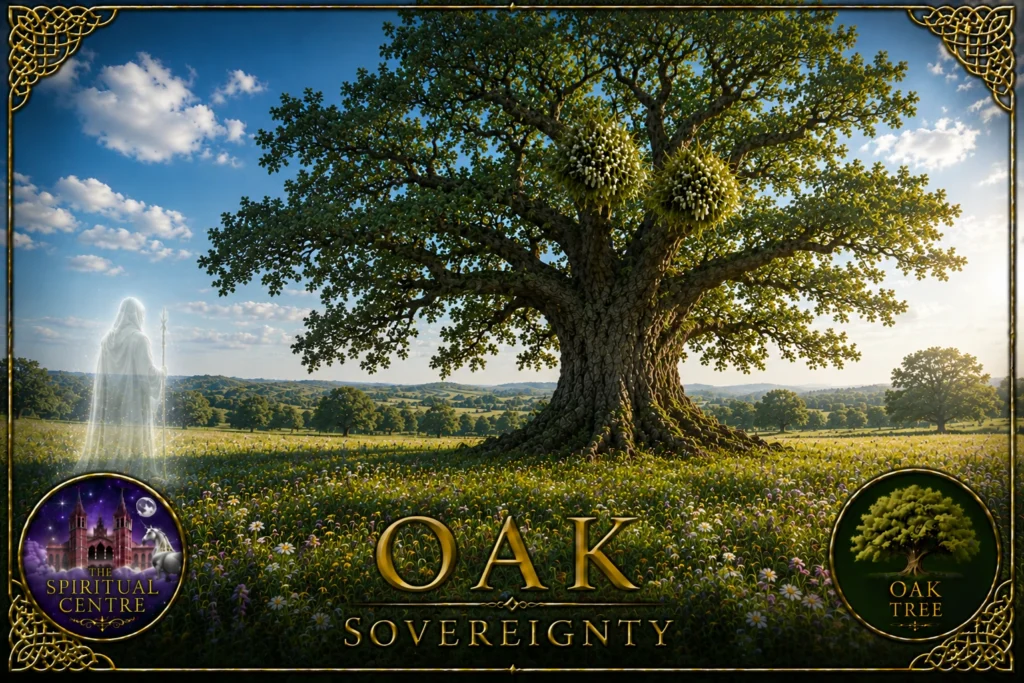
The Oak Tree carries a spiritual meaning shaped by strength, wisdom, endurance and the extraordinary ability to remain standing through change. Some trees seem to grow within a landscape; Oak seems to become part of its memory. Roads bend around it, generations shelter beneath it, stories settle among its branches, and what began as an acorn small enough to disappear within a hand can become a presence capable of outliving almost everyone who once knew it young.
Within Celtic and Ogham Tree Lore, Oak is Duir, Chieftain of the Trees. Yet strength alone cannot explain the affection humanity has carried for Oak across generations. Its symbolism reaches into protection and healing, gods and spirits, folklore and Animal Spirit, while its great canopy offers something much simpler: shelter within strength, wisdom within age and continuity within change.
The Secrets of the Oak Tree are found within these relationships. They live in the healing held within bark and leaf, the creatures sharing its woodland, the solstices turning around it and the stories entrusted to it by those who came before us. To discover Oak is not simply to discover an ancient tree; it is to discover how much of ourselves we have left beneath its branches.
Oak Tree – Ogham Tree Profile
Bruce Clifton
Name: Oak
Ogham: Duir > > > Duir ~ Dure ~ Dew-er
Letter: D
Lunar: 7th Moon of the Bnwyfre Celtic Tree Calendar (May 16th – June 14th)
Season: Spring ~ Summer ~ Autumn ~ Spirit
Element: Earth ~ Air/Wind ~ Fire ~ Water ~ Spirit
Direction: East ~ South ~ West
Moon Phase: Waxing Crescent ~ 1st Quarter
Moon Name: Hare ~ Pink ~ Seed ~ Bright
Influence: Masculine
Title: Chieftain
Age: 7 Human generations
Aura: Red / Purple
Healing: Anti-bacterial ~ Canker Sores ~ Crohn’s Disease ~ Diarrhoea ~ Flatulence ~ Haemorrhoids ~ Heart ~ Liver ~ Mouth Ulcers (see: Canker Sores) ~ Skin Rashes ~ Throat (infections) ~ Varicose Veins
Animal Spirit: Badger ~ Bear ~ Deer / Doe ~ Dog ~ Owl ~ Stag ~ Unicorn ~ White Fawn
Totem Entities: Cwn-Annwn ~ Dryads ~ Elementals ~ Fairies ~ Green Man ~ Maidens ~ Meliae
Gods and Deities: Gaia ~ Hermes Trismegistus ~ Perkunas ~ Thor ~ Tyr ~ Zeus
Secret Harmony: Continuity, Grounding, Permanence ~ Hermeticism ~ Inner Peace ~ Intuition ~ Mental Health ~ Past Life ~ Portal ~ Unanimity ~ Universal Knowledge
Festival: Summer Solstice (coming soon)
Cosmos: Jupiter (coming soon)
Key Words: Sovereignty ~ Ancestry ~ Endurance
Essence of the Oak Tree
Bruce Clifton
There comes a time when an Oak no longer seems to belong to the age in which we find it. The hands that might once have touched its young bark are gone; the voices that spoke beneath its first branches have fallen silent. Yet still it grows. The Oak remembers simply by remaining.
Its strength is easy to admire, but strength is not its essence. A storm can tear away a branch. Lightning can split the crown. Age can hollow the heartwood until an ancient tree appears to be surviving around an emptiness. Yet spring returns, leaves unfold from branches that still carry life, and somewhere among them an acorn begins again. Oak teaches that endurance is not remaining unchanged; it is finding a way to continue while change becomes part of who we are.
Beneath its canopy, time seems different. Yesterday survives beside today: an old wound closes around new wood, fallen leaves become the Earth that feeds tomorrow’s growth, and roots reach through soil made from lives that came before. Nothing is wasted. Death feeds life, darkness accompanies light, and the past does not disappear simply because the future has arrived.
Perhaps this is why humanity has placed so much beneath the Oak. Gods have spoken through its thunder. Druids have gathered within its groves. Kings have hidden among its leaves, lovers beneath its branches, spirits within its hollows. We have carved signs for it, told stories about it and returned generation after generation to stand beneath the same spreading canopy. We keep giving Oak our meanings, while Oak quietly gives us somewhere to put them.
And still there is the acorn.
Held within something small enough to rest in the palm is the possibility of centuries. It does not know the storms that will come, whose hands may touch its bark, what stories might someday gather beneath it, or whether anyone will remember the person who planted it. It simply contains tomorrow.
This is the Essence of Oak. Not immortality, because even the greatest Oak must eventually fall. Not strength alone, because even Oak can break. It is continuance: the extraordinary ability of life to carry something forward through change, loss, darkness and renewal.
We may never know who rested beneath an Oak a thousand years ago. A thousand years from now, nobody may remember us.
But somewhere, an acorn may remember for us.
Healing Lore of the Oak Tree
Bruce Clifton
There is healing in the Oak before a remedy is ever prepared. To rest against its trunk, shelter beneath its canopy or simply stand within its presence is to encounter something that has learned how to endure. Storms have passed through its branches, wounds have closed within its bark, and seasons of abundance have followed seasons when almost nothing appeared to grow.
Oak carries that resilience into its Healing Lore. Bark, leaves, acorns and galls have each found their place within traditional remedies, particularly where the body needs cleansing, soothing, strengthening or support. Tannins give Oak its characteristic astringency, connecting the physical properties of the tree with generations of practical healing knowledge.
Yet healing is not always about curing what hurts. Sometimes it is about finding enough strength to remain standing while change takes place. Oak does not promise a life without storms; it reminds us that life can continue after them.
Scope & Notice — Healing Indemnity
The information contained herein is provided for educational and contemplative purposes only. Every effort has been made to ensure accuracy and reliability; however, no guarantees are stated or implied. The author is not offering medical or professional advice, and this content should not be considered a substitute for qualified guidance. If in doubt, readers are advised to consult a suitable professional before undertaking any remedies or practices referenced.
About the Healing List
The following list of ailments and applications is not exhaustive. It has been limited to the most commonly recorded and traditionally associated uses, with remedies drawn primarily from the oak tree itself and secondarily from plants and vegetation that grow in relationship with it.
There are many ways to prepare herbal infusions, including teas, tinctures, and decoctions. Ingredients may be gathered traditionally or sourced responsibly online. As with all natural remedies, preparation, intention, and respect for the plant are considered as important as the method itself.
Oak Tree – Healing Remedies Oracle
We have alphabetised this list of healing qualities of the oak tree solely for ease of reference; they include but are not limited to:
1) Anti-bacterial
2) Canker sores
3) Crohn’s disease
4) Diarrhoea
5) Flatulence
6) Haemorrhoids
7) Heart
8) Liver
9) Mouth Ulcers (see: Canker Sores)
10) Skin Rashes
11) Throat (infections)
12) Varicose Veins
Anti-bacterial / Oak Tree
Ingredients:
Oak Bark (Quercus robur, Quercus petraea, Quercus pubescens)
Oak Bark Decoction
Oak Bark Extract
Key Properties:
Tannins (including ellagitannins and gallotannins) – Gallic Acid – Ellagic Acid – Polyphenols – Flavonoids
Traditional Actions:
Astringent, toning, drying excess moisture, supporting surface cleanliness, calming minor irritation of skin or mouth tissues
Preparation:
Oak bark is most traditionally prepared as a decoction, with the bark gently simmered in water and then strained. Once cooled to a suitable temperature, the liquid may be used externally as a wash, rinse, compress, or mouth rinse where cleansing and firming support are required. Oak bark extract may also be incorporated into a neutral cream, gel, or ointment for light external application.
Traditional Use:
Within traditional European plant practice, oak bark has long been valued where a remedy was needed that could both tighten tissue and discourage unwanted microbial growth. Its high tannin content gives it a long-standing reputation as a plant of cleansing, containment, and protection, especially for minor irritations affecting the skin, oral tissues, and other superficial areas. Modern herbal references continue to recognise oak bark for traditional use in minor skin inflammation, minor inflammation of the oral mucosa, and for the symptomatic relief of haemorrhoids, while laboratory studies also support antimicrobial activity, though this varies by preparation and organism. Oak is best understood here as a supportive external remedy rather than a replacement for treatment where there is active or worsening infection. Use on open wounds, large damaged areas, or clearly infected skin or mucosa is not advised in the EMA monograph.
Canker Sores / Oak Tree
Ingredients:
Oak Bark (Quercus robur, Quercus petraea, Quercus pubescens)
Oak Bark Decoction
Key Properties:
Tannins (including ellagitannins and gallotannins) – Gallic Acid – Ellagic Acid – Polyphenols – Flavonoids
Traditional Actions:
Astringent, toning oral tissues, reducing irritation, supporting surface cleansing, encouraging natural healing response
Preparation:
Oak bark is most traditionally prepared as a decoction, with the bark gently simmered in water and then strained. Once cooled to a comfortable temperature, the liquid may be used as a mouth rinse, swished gently around the mouth and then expelled. This may be repeated at intervals, allowing the preparation to come into contact with affected areas.
Traditional Use:
Within traditional European plant practice, oak bark has long been used where the soft tissues of the mouth become irritated, inflamed, or ulcerated. Its high tannin content supports the tightening and toning of the mucosal lining, helping to reduce sensitivity, draw excess moisture, and create a more balanced oral environment. Used as a rinse rather than ingested, oak is regarded as a steady and grounding support, working through contact rather than force, and offering gentle containment where canker sores or mouth ulcers are present.
Crohn’s Disease / Oak Tree
Ingredients:
Oak Bark
Oak Bark Decoction
Key Properties:
Tannins (including ellagitannins and gallotannins) – Gallic Acid – Ellagic Acid – Polyphenols – Flavonoids
Traditional Actions:
Astringent, toning the digestive tract, reducing excess fluidity, calming irritation, supporting digestive stability
Preparation:
Oak bark is most traditionally prepared as a light decoction, with a small amount of bark gently simmered in water and then strained. Taken in very small quantities, the preparation is used cautiously, allowing the body time to respond. It is not intended for prolonged or continuous use and is traditionally reduced or stopped once balance begins to return.
Traditional Use:
Within traditional European plant practice, oak bark has been used where the digestive system becomes unsettled, inflamed, or overly loose. Its high tannin content supports the tightening and toning of the intestinal lining, helping to reduce irritation and restore a sense of containment. Oak is regarded as a measured and disciplined ally, used sparingly and observed carefully, reflecting its nature as a tree of strength, restraint, and steady correction rather than ongoing support.
Diarrhoea / Oak Tree
Ingredients:
Oak Bark
Oak Bark Decoction
Key Properties:
Tannins (including ellagitannins and gallotannins) – Gallic Acid – Ellagic Acid – Polyphenols – Flavonoids
Traditional Actions:
Astringent, tightening the digestive tract, reducing excess fluidity, calming irritation, supporting digestive balance
Preparation:
Oak bark is most traditionally prepared as a light decoction, with a small amount of bark gently simmered in water and then strained. Taken in small quantities, the preparation is used carefully, allowing the body time to respond. It is not intended for prolonged use and is traditionally reduced or stopped once the system begins to settle.
Traditional Use:
Within traditional European plant practice, oak bark has long been used where the digestive system becomes loose, unsettled, or overactive. Its high tannin content supports the tightening and toning of the intestinal lining, helping to reduce excess fluid and restore a more stable rhythm within the bowels. Oak is regarded as a steady and containing ally, working through restraint rather than force, offering support where the system requires grounding and rebalancing.
Flatulence / Oak Tree
Ingredients:
Oak Bark
Oak Bark Decoction
Acorn (prepared)
Key Properties:
Tannins – Gallic Acid – Ellagic Acid – Polyphenols – Flavonoids
Traditional Actions:
Astringent, reducing excess gas, supporting digestive tone, calming irritation, encouraging digestive balance
Preparation:
Oak bark is most traditionally prepared as a light decoction, gently simmered and strained before use. Taken in small quantities, it is used with care to support digestive balance. In some traditional approaches, prepared acorn may be lightly processed and taken in moderation, allowing the natural compounds to support the digestive system without excess.
Traditional Use:
Within traditional European plant practice, oak has been used where the digestive system becomes bloated, unsettled, or burdened by excess gas. Its tannin content supports the tightening and toning of the digestive tract, helping to reduce excess fermentation and restore a more stable internal environment. Oak is regarded as a steady and containing ally, working through restraint and balance, offering grounding support where the system requires settling rather than stimulation.
Haemorrhoids / Oak Tree
Ingredients:
Oak Bark
Oak Bark Decoction
Oak Bark Extract
Key Properties:
Tannins (including ellagitannins and gallotannins) – Gallic Acid – Ellagic Acid – Polyphenols – Flavonoids
Traditional Actions:
Astringent, toning tissues, reducing swelling, calming irritation, supporting surface repair
Preparation:
Oak bark is most traditionally prepared as a decoction, with the bark gently simmered in water and then strained. Once cooled to a comfortable temperature, the liquid may be used as a wash, sitz bath, or compress applied externally to the affected area. Oak bark extract may also be blended into a neutral cream or ointment for light external application.
Traditional Use:
Within traditional European plant practice, oak bark has long been used where tissues become swollen, irritated, or weakened, as seen with haemorrhoids. Its high tannin content supports the tightening and toning of tissues, helping to reduce discomfort, calm irritation, and restore a sense of firmness to the affected area. Applied externally, oak is regarded as a steady and grounding ally, offering containment and support while encouraging the natural settling and rebalancing of the tissues.
Heart / Oak Tree
Ingredients:
Oak Bark
Acorn (prepared)
Key Properties:
Polyphenols – Flavonoids – Tannins – Antioxidant compounds
Traditional Actions:
Supporting circulation, toning the system, providing antioxidant support, encouraging vitality, steadying the body over time
Preparation:
Oak is used more cautiously in this context. Prepared acorn may be taken in small, moderate quantities, traditionally processed to reduce bitterness, while oak bark is used sparingly as a light decoction where appropriate. Intake is gradual and observed, allowing the body time to respond.
Traditional Use:
Within traditional understanding, oak has been associated with strength, endurance, and longevity, qualities reflected in its supportive role for the heart and circulatory system. Its natural polyphenols and antioxidant compounds are recognised for helping to protect against oxidative stress, supporting the maintenance of healthy function over time. Oak is regarded as a slow and steady ally, working through continuity rather than immediate effect, and is used with awareness, moderation, and respect for its strength.
Liver / Oak Tree
Ingredients:
Oak Bark
Oak Bark Decoction
Acorn (prepared)
Key Properties:
Tannins – Polyphenols – Flavonoids – Antioxidant compounds
Traditional Actions:
Astringent, supporting digestive function, encouraging metabolic balance, toning internal systems, supporting gradual detoxification processes
Preparation:
Oak bark is most traditionally prepared as a light decoction, gently simmered and strained before use. Taken in very small quantities, it is used cautiously and not for prolonged periods. Prepared acorn may also be taken in moderation, traditionally processed to reduce bitterness. Use is gradual, allowing the body time to respond and adjust.
Traditional Use:
Within traditional European plant practice, oak has been used where the digestive and metabolic systems feel sluggish, burdened, or out of balance. Its tannin content supports the toning and tightening of internal tissues, while its broader compounds are associated with supporting the body’s natural processes of regulation and balance. Oak is regarded as a measured and steady ally, used with restraint and awareness, offering grounding support where the system requires correction rather than stimulation.
Mouth Ulcers / Oak Tree
Ingredients:
Oak Bark
Oak Bark Decoction
Key Properties:
Tannins (including ellagitannins and gallotannins) – Gallic Acid – Ellagic Acid – Polyphenols – Flavonoids
Traditional Actions:
Astringent, toning oral tissues, reducing irritation, supporting surface cleansing, encouraging natural healing response
Preparation:
Oak bark is most traditionally prepared as a decoction, with the bark gently simmered in water and then strained. Once cooled to a comfortable temperature, the liquid may be used as a mouth rinse, swished gently around the mouth and then expelled. This may be repeated at intervals, allowing the preparation to come into contact with affected areas.
Traditional Use:
Within traditional European plant practice, oak bark has long been used where the soft tissues of the mouth become irritated, inflamed, or ulcerated. Its high tannin content supports the tightening and toning of the mucosal lining, helping to reduce sensitivity, draw excess moisture, and create a more balanced oral environment. Used as a rinse rather than ingested, oak is regarded as a steady and grounding ally, offering containment and support where mouth ulcers are present.
Skin Rashes / Oak Tree
Ingredients:
Oak Bark (Quercus species)
Oak Extract (Quercus species)
Key Properties:
Ellagitannins – Gallotannins – Ellagic Acid – Gallic Acid – Flavonoids – Triterpenes
Traditional Actions:
Astringent, soothing irritated skin, reducing surface inflammation, strengthening and toning the skin barrier
Preparation:
Oak bark may be finely prepared and simmered gently in water to create a mild infusion. The resulting liquid can be added to warm bathwater or used as a skin rinse where irritation, redness, or rash is present.
The bark may also be wrapped in cloth after simmering to prepare a warm compress or poultice. Applied externally, this preparation allows the plant’s natural astringent compounds to interact with the skin, encouraging the tissue to settle and regain balance.
In more concentrated preparations, oak extracts may be blended into a neutral base cream or ointment. Such preparations are sometimes applied lightly to affected areas to provide additional soothing support.
Traditional Use:
Within traditional plant practice oak has long been associated with firmness, containment, and strengthening qualities. Preparations made from the bark were sometimes used where irritated or inflamed skin required steady support rather than strong intervention.
Oak’s natural astringent compounds were understood to gently tighten and tone the skin, drawing excess heat or irritation outward while supporting the body’s natural barrier. When added to warm baths, compresses, or simple creams, oak preparations were valued for their grounding effect, helping the skin regain balance where rash, redness, or surface inflammation had taken hold.
As with all botanical applications, the skin’s response should be observed carefully, and persistent or worsening irritation should be assessed by a qualified healthcare professional.
Throat (infections) / Oak Tree
Ingredients:
Oak Bark
Oak Bark Decoction
Key Properties:
Tannins (including ellagitannins and gallotannins) – Gallic Acid – Ellagic Acid – Polyphenols – Flavonoids
Traditional Actions:
Astringent, toning throat tissues, reducing irritation, supporting surface cleansing, calming inflammation
Preparation:
Oak bark is most traditionally prepared as a decoction, with the bark gently simmered in water and then strained. Once cooled to a comfortable temperature, the liquid may be used as a gargle, allowing it to come into contact with the throat before being expelled. This may be repeated at intervals as required.
Traditional Use:
Within traditional European plant practice, oak bark has long been used where the throat becomes sore, irritated, or inflamed. Its high tannin content supports the tightening and toning of throat tissues, helping to reduce discomfort and create a more balanced environment within the throat. Used as a gargle rather than ingested, oak is regarded as a steady and grounding ally, offering containment and support where infection or irritation is present.
Varicose Veins / Oak Tree
Ingredients:
Oak Bark
Oak Bark Decoction
Oak Bark Extract
Key Properties:
Tannins (including ellagitannins and gallotannins) – Gallic Acid – Ellagic Acid – Polyphenols – Flavonoids
Traditional Actions:
Astringent, toning blood vessels, supporting circulation, reducing swelling, strengthening vessel walls
Preparation:
Oak bark is most traditionally prepared as a decoction, with the bark gently simmered in water and then strained. Once cooled, the liquid may be used as a wash or compress applied externally to affected areas. Oak bark extract may also be blended into a neutral cream or ointment for light topical application.
Traditional Use:
Within traditional European plant practice, oak bark has long been used where veins become distended, weakened, or uncomfortable. Its high tannin content supports the tightening and toning of vessel walls, helping to reduce swelling and encourage a greater sense of firmness within the tissues. Applied externally, oak is regarded as a steady and grounding ally, offering containment and support where circulation requires strengthening and balance.
Celtic Tree Lore of the Oak Tree
Bruce Clifton
Duir is Oak, the seventh letter of the Ogham and one of the great Chieftains of the Trees. Its insignia crosses the stemline with two strokes, simple in appearance yet carrying a tree whose roots spread far beyond Ireland. The old kennings remember Duir as the highest of trees, while others recognise the craftsman’s hand within its timber. Oak was not simply admired; it was useful, enduring and important enough to acquire status within the language of the trees.
Follow Oak west through Ireland, Wales and Britain and its name changes while something familiar remains: Dair, Duir, Derw. Follow the tradition eastward into Gaul and the relationship between Oak and the Druids becomes impossible to ignore. Pliny described the Druids choosing Oak for their sacred groves and approaching mistletoe found upon it with ceremony and reverence. To them, he tells us, what appeared upon the Oak could be understood as having come from the divine.
Gaul also brings us into the world of Ogmios, the old Celtic figure of eloquence whose voice held people willingly through words. His presence reminds us that Celtic spiritual culture was never confined to one island or one surviving manuscript. Ideas, stories and beliefs travelled with people, crossing rivers and mountains, following trade, migration and settlement into territories where one tradition encountered another.
Travel further beyond the Rhine and Oak continues speaking, although the names of those listening begin to change. Among the Baltic peoples we encounter Perkūnas, thunderer of the heavens, whose relationship with Oak became so intimate that the tree belonged to his sacred landscape. His name itself has been understood through an ancient linguistic relationship with Oak. He is not Celtic, nor does he need to become Celtic to belong within this journey. He shows us that beyond the borders of one culture, another people could stand beneath Oak, hear thunder break above its canopy and recognise the presence of the divine.
This wider landscape allows Celtic Tree Lore to breathe. The Celts did not inhabit a sealed world. Beyond them lived Germanic, Baltic, Slavic and other peoples, each carrying languages, gods and understandings of nature that could resemble, influence or simply stand beside their own. Oak becomes one of the meeting places. The tree remains recognisable even when the language, deity and explanation surrounding it change.
Within Ogham, Duir gathers that enormous landscape into a single insignia. Oak stands through the turning year, reaching the Summer Solstice when light reaches its height and remaining as that light begins its journey towards the Winter Solstice, where darkness itself reaches fulfilment and light returns. In the living tree lore of today, Oak can therefore inhabit both thresholds. Summer and Winter need not contradict each other; each reveals another moment within the same continuing cycle.
This is also where the relationship between Oak and Holly acquires greater depth. Their solstitial meeting does not require one to destroy the other. Each can carry the year towards the other, exchanging prominence as light grows and diminishes. What folklore later personifies as kings, queens or seasonal combat can also be understood through the trees themselves: two enduring ever-present companions expressing different movements within the year.
Perhaps this is the greater story contained within Duir. A few strokes upon a stemline can lead from an Irish Ogham inscription into woodland, across Britain and Gaul, beyond the Rhine and towards peoples who gave Oak different names while continuing to recognise something extraordinary within it. Languages changed. Gods acquired different faces. Beliefs met other beliefs and became the inheritance from which later traditions grew.
The Druids of today inherit that journey rather than merely its destination. Duir is not a relic imprisoned within an ancient alphabet; it is Oak still standing within a living landscape of language, nature, Spirit and belief. The insignia gives it a name, but the tree gives that name its meaning.
Folklore of the Oak Tree
Bruce Clifton
The Oak has stood for so long within the human landscape that stories seem almost naturally to gather beneath it. Kings have hidden within its branches, lovers have met beneath its canopy, fairies have occupied its hollows and communities have gathered around it to mark the boundaries of their world. Some stories belong to history, others to legend, and after centuries of retelling the boundary between the two is not always easy to find.
In Sherwood Forest, the Major Oak became the legendary meeting place of Robin Hood and his Merry Men. At Boscobel in 1651, however, Oak entered recorded history when the future Charles II hid in an oak tree while escaping Parliamentary soldiers after the Battle of Worcester. The story became so deeply embedded in national memory that Royal Oak Day was established after the restoration of the monarchy.
Other Oaks became landmarks around which communities gathered. Gospel Oaks stood along parish boundaries, where scripture could be read during the old custom of Beating the Bounds. At Glastonbury, the ancient Oaks known as Gog and Magog became associated with giants and an old processional route towards the Tor. In Bradgate Park, the strangely pollarded Topless Oaks acquired the melancholy legend that their branches were cut in mourning following the execution of Lady Jane Grey.
Oak also entered the smaller superstitions of everyday life. An acorn carried in the pocket could bring good fortune, while acorns placed near windows were believed to protect a home from lightning. Catching a falling Oak leaf could bring luck, and the order in which Oak and Ash opened their leaves became a country method of predicting whether the coming summer would be wet or dry.
Not every hollow in an ancient Oak was considered empty. Knots and openings in old trunks became fairy doors, places where the ordinary woodland might briefly touch another world. Mistletoe growing upon Oak acquired an especially powerful reputation. Because it occurs relatively rarely, later folklore treated the mistletoe-bearing Oak with such reverence that interfering with one could itself be considered unlucky.
Then there is the Oak King and the Holly King or Queen, a story that continues to evolve within modern spiritual tradition. At the Winter Solstice Oak receives the returning light and carries the waxing year towards summer; at the Summer Solstice the balance turns and Holly accompanies the year towards winter. Sometimes they battle, sometimes one surrenders the crown to the other, but beneath the story lies something gentler: neither light nor darkness needs to defeat the other for the seasons to continue.
Perhaps this is why Oak gathers so many different stories. A tree that can outlive the storyteller allows history, superstition, fable and spiritual imagination to settle around the same trunk. The people eventually leave, one generation is replaced by another generation and another; the Oak remains, and another story begins beneath its branches.
A single acorn planted at the time of Jesus encourages the words: Did those feet in ancient time, walk upon England’s mountains green?
Animal Spirit of the Oak Tree
Bruce Clifton
Walk quietly beneath the Oak and the woodland begins to reveal itself. A Badger disappears among the roots, Deer move softly through the shadows, an Owl watches from somewhere above, while the presence of Bear, Hound and Stag brings strength without disturbing the peace. Nothing needs to announce that it belongs here. It simply does.
And perhaps this is part of the Oak’s gift. Its strength creates sanctuary rather than dominance; beneath its branches there is room for the powerful and the vulnerable, the watchful and the gentle, the ordinary and the extraordinary. Even Unicorn and White Fawn can enter this woodland without feeling misplaced, for Animal Spirit is not restricted by what can be physically seen.
The Animal Spirit of the Oak invites us to experience the woodland as a community, where every creature brings its own character while sharing the same living presence. Oak stands at its heart, not as ruler of the forest, but as the great old tree beneath which life is allowed to belong.
Oak Tree – Animal Spirit Oracle
Bruce Clifton
We have alphabetised this list of animal spirit that harmonise with the oak tree solely for ease of reference:
1) Badger
2) Bear
3) Deer (Doe)
4) Dog (Hound)
5) Owl
6) Stag
7) Unicorn
8) White Fawn
Badger / Oak Tree
Badger embodies that quiet, steadfast spirit, often working behind the scenes with a gentle yet impactful presence. It blends seamlessly into the background, a master of subtlety, yet when the moment is right, it steps forward to unveil surprises that catch everyone off guard.
This creature signifies clarity of thought and an innate sense of orderliness; it possesses a wisdom that transcends mere knowledge, tapping into a more profound understanding of the world around us. In this enchanted tapestry of nature, we also find the Oak and the Stag, two powerful symbols in their own right. The Oak stands tall and steadfast, its roots deep in the earth as it reaches for the sky, a true testament to resilience and strength.
Meanwhile, the majestic Stag represents grace and courage, moving through its domain with an air of nobility and assurance. Together, these three allies, the Badger, Oak, and Stag, form a triad of power characterised by steadiness and balance. They remind us that even in moments of uncertainty or chaos, we can rely on our inner strength and wisdom to guide us forward. Like a steady hand guiding a wandering ship back to shore amidst turbulent waters, they inspire us to embrace our resolve while remaining grounded in our values.
Bear / Oak Tree
The Bear walks the ancient forests with quiet confidence, finding refuge beneath the mighty Oak, where the woodland has stood undisturbed for countless generations. Among towering trunks and deep-rooted boughs, the Bear discovers both shelter and abundance, turning fallen logs in search of insects, foraging for berries and nuts, and following the salmon-bearing rivers that weave their way through the heart of the forest. Here, beneath the King of Trees, the Bear becomes a natural guardian of the woodland, its presence bringing balance to every living thing around it.
Like the Oak, the Bear is a symbol of strength, guardianship and sovereignty. Neither seeks conflict, yet both command respect through their quiet presence alone. The Oak stands firm through every season, deeply rooted within the land, while the Bear moves with calm assurance, knowing when to act and when to remain still. Together they remind us that true courage is not measured by dominance or aggression, but by the wisdom to protect what is sacred, to live in harmony with nature and to draw strength from Bnwyfre, the Breath of Life, that flows through the ancient woodland.
Deer / Oak Tree
Beneath the outstretched boughs of the ancient Oak, the gentle deer moves with quiet grace, its presence softening the majesty of the woodland giant. The Oak stands as a timeless pillar of strength, whilst the deer carries an aura of peace, sensitivity and quiet awareness. Together they create a sanctuary where power is tempered by gentleness and where every living creature finds its rightful place. The woodland becomes more than a forest; it becomes a living temple where harmony is felt in every leaf, every breath and every footfall upon the earth.
The deer walks without disturbing the silence, pausing only to listen to the whispers carried upon the wind. In its presence, the Dryads emerge from the shelter of the Oak, the elementals gather amongst root and branch, and the unseen world draws a little closer to our own. There is no fear here, only trust, for the deer carries no desire to dominate, only to belong. Its quiet spirit reminds us that true strength is measured not by power alone, but by the peace we bring wherever we walk.
Within the Bnwyfre Spiritual Order, the Oak and the deer reveal the perfect balance between strength and compassion, endurance and grace. One stands firm against the passing centuries, the other moves freely through them, carrying the Breath of Life wherever it roams. Together they teach that when wisdom is joined with kindness, the woodland awakens as one living family, where mankind, nature and the unseen realms exist not in separation, but in sacred harmony. Here, beneath the shelter of the Oak, every soul is welcomed, every spirit is honoured, and every journey begins with reverence for the living world.
Dog (Hound) / Oak Tree
A magnificent giant of a dog roams freely through the enchanting forests, sprawling fields, and serene meadows that stretch as far as the eye can see. With an untamed wild spirit that defies the limitations of civilisation, he embodies both strength and grace. This majestic creature thrives in the natural world, where every rustle in the underbrush and whisper of the wind feels like an invitation to explore. At his side is his steadfast master, the venerable Oak Tree, an ancient guardian whose gnarled branches reach skyward like an old sage offering wisdom to all who pass by. The Oak nurtures within the Hound an unwavering sense of loyalty and unconditional love; it is here that their bond flourishes.
The Hound’s heart beats with affection not just for his master but also for all things that complement his beloved Oak’s majestic presence, be it the delicate wildflowers blooming at its roots or the cheerful birds nesting among its branches. Together, they form a harmonious duo within this idyllic landscape, where nature thrives in perfect balance.
The Hound serves as both protector and companion to the Oak, embodying a symbiotic relationship steeped in folklore, a timeless narrative reflecting themes of loyalty, love, and reverence for nature’s wonders. In this captivating realm where man-made structures fade away into memory, one can truly appreciate how such connections enrich our lives and nurture our spirits.
(See: Cwn Annwn)
Owl / Oak Tree
Owl is the embodiment of unseen wisdom, applies ancient lore, perceives and comprehends all, communicates with everything, and imparts this knowledge to the Oak. The Oak Tree symbolises strength and endurance; it stands tall with roots that dig deeply into the earth. It represents the profound wisdom that Owl generously shares. Through their connection, a beautiful exchange unfolds; Owl conveys her insights of the night and the mysteries it encompasses, while the Oak transforms these lessons into tangible experiences for all living beings in its vicinity. As the seasons shift, this partnership flourishes in extraordinary ways. The whispers of the wind carry secrets from Owl to Oak, fostering an understanding that transcends generations.
The Oak’s majestic branches provide shelter to creatures of all sizes, with the legacy of knowledge, passed down through the ages, touching each one. This sacred union lies not merely in survival but also growth, a testament to the notion that true wisdom is intended to be shared and lived in harmony with nature itself. The stories woven between Owl and Oak serve as gentle reminders for us all: to listen attentively, observe with quietude, and embrace the teachings that surround us as we navigate the intricacies of life together.
Stag / Oak Tree
Stag is the majestic energy felt as you near the Oak. He will not be seen until he chooses to let you see him; his energy can be identified before his physical presence. If Stag lets you see him, know he is with you until he is no longer needed; if you are the velvet glove, then he is the iron inside the glove. A situation around you needs confidence with compassion; softly, it will only go so far before experience is needed. The mighty Stag will bring that experience to the forefront of your journey, helping you navigate challenges with strength and grace.
His presence serves as a reminder that true power lies not just in assertiveness but also in the ability to listen and connect with others on a deeper level. When a Stag appears, it is an invitation to embody both gentleness and fortitude, an opportunity to wield your inner strength wisely. In moments of uncertainty or self-doubt, call upon the Stag’s energy to bolster your resolve. Imagine him standing tall among the trees, his antlers reaching for the sky, a symbol of resilience and wisdom. Allow yourself to be inspired by his quiet authority; he teaches us that leadership can be gentle yet firm, compassionate yet decisive.
As you embrace this duality within yourself, remember that every challenge is also an opportunity for growth. Stag encourages you to step into situations where confidence is necessary while maintaining a loving attitude towards those around you. This delicate balance will enable you not only to thrive but also to uplift others who may need guidance along their path. Trust in Stag’s presence as an ally on your journey; whenever doubt clouds your mind or fear grips your heart, know that he walks beside you until his lessons are learnt and integrated into your being. Embrace this sacred connection with nature’s wisdom; it will empower you as you face life’s trials with courage wrapped in compassion.
Unicorn / Oak Tree
Deep within the ancient woodland, where the mighty Oak stretches its branches towards the heavens and its roots embrace the earth, the Unicorn finds a place of perfect peace. It is said that the Unicorn will only reveal itself where the Breath of Life flows in perfect harmony, and few places carry that sacred balance more completely than beneath the shelter of the Oak. Here, innocence is protected, love is freely given and faith quietly flourishes amongst the timeless silence of the forest.
The Unicorn asks for nothing except a pure heart. Drawn not by power or wealth but by kindness, honesty and compassion, it walks unseen beside those whose spirit remains open to wonder. Beneath the ancient Oak, the woodland itself seems to pause as Dryads gather within its branches, elementals move gently amongst its roots and every creature senses the quiet majesty of their presence. The Oak does not command the Unicorn; it welcomes it as an equal, for both understand that true strength is born through gentleness rather than force.
Within the Bnwyfre Spiritual Order, the Oak and the Unicorn reveal the perfect union of strength and innocence. One stands immovable through the passing centuries, whilst the other moves like a whisper through the woodland, bringing reassurance wherever it appears. Together they remind us that the greatest power is never domination, but love guided by wisdom, faith tempered with humility, and a heart that remains forever open to the quiet magic woven throughout the living forest.
White Fawn / Oak Tree
White Fawn, often revered in folklore and nature alike, is a truly sacred creature embodying purity and grace. This enchanting White Fawn is not just an ordinary animal; it is a rare gem of the natural world, with its chance of reaching adulthood being extraordinarily slim. In the complex tapestries of nature, where survival often hinges on conformity and camouflage, the distinctive white coat marks this fawn as different, making it a target for the harsh realities of existence. Should it defy all odds and survive into adulthood, a feat akin to a delicate miracle, it will seek solace within its herd, forever encircled by vigilant guardians. It is within the folds of the ancient Oak that this creature will find solace and security.
These protective companions form a close-knit community around the White Fawn, creating a sanctuary that fosters safety amidst potential dangers lurking in their environment. The image of this rare fawn nestled at the heart of its protective circle evokes feelings of warmth and security, a testament to both its uniqueness and the beauty of collective guardianship in nature. In many cultures, such creatures are considered symbols or omens, representatives of purity or harbingers of significant change, their existence weaving stories that inspire awe and reverence among those fortunate enough to encounter them. Thus, the White Fawn stands not only as an exceptional marvel but also as an enduring reminder of nature’s delicate balance between fragility and protection.
Totems and Entities of the Oak Tree
Bruce Clifton
The Oak is rarely alone. Beneath its great canopy exists a community of life, both seen and unseen, and among its oldest companions are the Dryads, spirits whose presence is inseparable from the living tree. What began with the Oak reaches into the wider woodland, where every root, branch and whisper of leaves can become an expression of something greater than itself.
Among these presences stands the Green Man, his face emerging through leaf and foliage as an embodiment of renewal and the enduring consciousness of the natural world. Around him gather Fairies, Elementals, Meliae and other beings whose stories have travelled through different lands and generations. Their names may change and their character may be understood differently, yet the feeling behind them remains remarkably familiar: nature is alive, and we are part of it.
The Druids understood that spirituality did not need to belong to one people or one place. As cultures met, stories travelled with them; local gods, spirits, entities and customs encountered new traditions without necessarily surrendering their own identity. Within this exchange flowed Bnwyfre, Breath of Life — the Life Force Energy, belonging not to one culture but to life itself.
The Totems & Entities of the Oak Tree continue that gathering. Different origins, different stories and different expressions of Spirit are welcomed beneath the same branches, just as the ancient Oak shelters countless forms of life without asking any of them to become the same.
Oak Tree – Totems and Entities Oracle
Bruce Clifton
We have alphabetised this list of totems and entities that harmonise with the oak tree solely for ease of reference:
1) Cwn Annwn
2) Dryads
3) Elementals
4) Fairies – (Fae – Sidhe)
5) Green Man (Oak King)
6) Maidens
7) Meliae (Nymphs)
Cŵn Annwn / Oak Tree
The Oak Tree has long been honoured as a tree of strength, protection, continuity, and sacred kingship, making it a natural companion to the Cŵn Annwn, the legendary hounds who guard thresholds and guide souls between realms. Where Oak stands as the great sheltering presence of the land, the Cŵn Annwn keep watch at its gates. Together they embody safety, loyalty, and the quiet authority that protects what matters most.
In Welsh and Celtic memory, the Cŵn Annwn are not mere beasts of fear, but guardians of passage. They move when the veil thins, escorting souls, maintaining order between worlds, and sounding the call when change is near. Oak holds a similar office. Its vast roots, mighty trunk, and far-reaching branches form a living bridge between underworld, human world, and heavens, making it a tree through which generations remain connected.
There is something deeply human in this union. Just as a faithful dog guards the home and welcomes those it knows, Oak has long symbolised home, refuge, and belonging. Villages gathered beneath it, councils met in its shade, families marked time through its endurance. The Cŵn Annwn bring that same loyal guardianship in spiritual form, standing at the entrance to what is seen and unseen alike.
Within the wider woodland mysteries, Oak is also a meeting place for many beings: dryads, fae, maidens, elemental presences, and the Green Man. Yet every sacred gathering requires order, boundary, and trust. The Cŵn Annwn provide this unseen bond, the protective current that allows harmony to flourish among many worlds without confusion or intrusion.
They are especially potent at times of transition. During Samhain, when the old year wanes and the boundary between realms grows thin, the hounds are remembered as riders of the night air and escorts of souls. Oak, standing steadfast through storm and season, reminds us that even in change there is something enduring. Together they teach that passage need not mean abandonment, and endings need not arrive without guardians.
Within The Spiritual Centre, Oak and the Cŵn Annwn speak to those seeking safety, ancestral connection, courage, and reassurance in uncertain times. They remind us that the doorway is watched, the path is known, and no true soul travels without companions.
Dryads / Oak Tree
The Oak Tree has long been honoured as a tree of strength, kingship, endurance, sacred protection, and ancestral continuity, making it the natural and ancient home of the Dryads. If the forest has a throne, it is often imagined beneath the Oak, and if the trees have elder guardians, they are felt strongly within its roots, trunk, and far-reaching boughs. Oak and Dryad belong together as power and presence, body and spirit.
The Dryads are primordial spirits and among the eldest presences of the woodland world, older than human memory. They are guardians of the ancient forest, woodland realms, groves, and trees, woven into the first life of the woods. Within Oak, that ancient current feels especially deep. Its slow growth, vast strength, and long life make it a fitting vessel for beings who measure time differently from humankind.
To stand beneath an old Oak is to enter a place where many lives have passed while the tree remained. Councils gathered there, vows were spoken there, storms were weathered there, and generations were raised in its shade. The Dryads hold such memory. They are not historians of words, but keepers of atmosphere, continuity, and the unseen imprint left by life lived in sacred places.
Oak is also a tree of shelter and refuge. Birds nest in it, creatures feed from it, fungi thrive with it, and people have long turned to it for guidance. The Dryads mirror this generosity. Their purpose is not domination, but harmony. They steady the field around the tree, welcome what belongs, and strengthen the quiet sense of safety, belonging, and peace that old Oaks often inspire.
Yet Oak does not teach softness alone. Its wood is strong, its stance unyielding, and its roots hold firm through storm. So too the Dryads of Oak carry protective force. They guard boundaries, resist intrusion, and remind us that sacred places must be respected if they are to remain alive. Strength and kindness are not opposites here. They are companions.
Within The Spiritual Centre, Oak and the Dryads speak to those seeking grounding, ancestral connection, resilience, belonging, and enduring wisdom. They remind us that true power shelters life, and that the oldest strength is often the quietest.
Elementals / Oak Tree
The Oak Tree has long been honoured as the king of the forest, a tree of strength, shelter, sovereignty, endurance, and sacred protection. For this reason Oak is a natural home for the elementals, a place of refuge where many forms of life may gather in peace. In the spiritual realm it is known simply as Home, the great standing sanctuary where the currents of earth, air, fire, water, and spirit meet without conflict.
Within your wider tradition, the Dryads are the Oak’s first and oldest elementals, primordial guardians woven into the life of the tree itself. Through them the Oak welcomes other presences, not as strangers but as kin. What begins as one tree becomes a living court of many beings, each carrying their own nature while sharing one harmonious field.
The Gnomi know Oak through root and soil, acorn and hidden mycelial pathways beneath the ground. The Sylphs move through its leaves, winds, and canopy, carrying song, weather, and shifting thought. The Salamanders are present in sunlight stored in wood, in lightning striking branch, and in the transforming warmth of hearth fires born from fallen oak. The Undines gather in rain upon leaf, dew upon bark, and the streams nourished by woodland shade. Even the Spiritual Incarnates, those conscious of many forms of life, are drawn to Oak as a place of wisdom and belonging.
Oak does more than shelter. It creates relationship. Birds nest in it, insects feed within it, fungi trade through it, creatures rest beneath it, and generations of people have met in its shade. This is why it holds such power in myth. True kingship is not domination, but the capacity to sustain many lives. The elementals recognise this instinctively.
There is also unity here. In the sacred field surrounding an old Oak, differing energies are steadied and brought into accord. What is restless may calm. What is divided may remember its place within the whole. Love, cooperation, and mutual thriving are not sentimental ideas in this setting. They are natural law.
Within The Spiritual Centre, Oak and the elementals speak to those seeking grounding, protection, belonging, harmony, and ancestral strength. They remind us that the world is richest when many beings are allowed to flourish together, and that the highest power is the power that shelters life.
Fairies / Oak Tree
The Oak Tree has long been honoured as a tree of strength, kingship, shelter, and ancient continuity, making it a natural gathering place for the fairies and the wider faerie folk. Where Oak stands in field, forest, or old boundary land, it creates an atmosphere of rooted power and quiet protection in which unseen life may flourish. If Hawthorn guards the threshold, Oak often becomes the hall beyond the gate.
The fairies drawn to Oak are not merely playful spirits of blossom and breeze. Here they take on older qualities: wisdom, guardianship, loyalty, and communal harmony. Beneath ancient boughs, among roots deep with memory, they are imagined as keepers of hidden pathways, watchers of sacred places, and companions to the woodland beings who dwell nearby.
Oak shelters many lives in the visible world, and this abundance mirrors its place in the unseen. Birds nest in its branches, creatures feed from its acorns, fungi thrive through its roots, and generations rest in its shade. So too the fairy current gathers where life is already rich. The Fae recognise places of vitality, and old Oaks carry that presence in abundance.
There is also kingship in this union. In seasonal lore the Green Man or Oak King rules the waxing half of the year, and the fairy folk are often imagined as part of that celebratory court of leaf, growth, and midsummer brightness. Yet Oak’s power is never boastful. It protects by standing firm, not by demanding attention.
To sit beneath an old Oak in stillness is to feel a place that has held weather, centuries, and countless footsteps without losing itself. This is why fairy lore gathers there. Some places become sacred not through declaration, but through presence.
Within The Spiritual Centre, Oak and the fairies speak to those seeking protection, belonging, ancestral connection, wonder, and harmony with the living world. They remind us that true enchantment is not flimsy or fleeting. It can be rooted, enduring, and strong.
Green Man / Oak Tree
The Oak Tree has long stood as one of the great emblems of strength, sovereignty, endurance, and living continuity, making it a natural companion to the Green Man. Where Oak roots deeply and rises broadly into the light, the Green Man is felt as the awakening intelligence within that growth: the life that pushes outward each spring, the vitality that renews leaf and branch, and the ancient presence that turns woodland into sacred place.
The Green Man is not limited to one name or one culture. He appears wherever people recognised that nature is alive, cyclical, and filled with meaning. Leaf-faced carvings, woodland guardians, antlered powers, storm gods, and seasonal kings all carry something of his current. In the Oak, that current becomes especially visible through longevity, resilience, and majestic presence.
Among his many expressions, one of the most familiar is the Oak King, sovereign of the waxing year. From the winter solstice as daylight returns, he governs the season of rising sap, courage, fertility, and outward growth. At the summer solstice, when the sun reaches its height, stewardship passes to the Holly Queen, keeper of the inward half of the year until the crown returns once more. Thus Oak becomes part of the great rhythm of time itself.
Oak also mirrors the Green Man through its character. It may live for centuries, withstand storm, shelter birds and beasts, feed life through acorn and leaf, and continue standing even when hollowed with age. True power is shown here not through domination, but through the capacity to sustain many lives. The Green Man’s kingship carries the same lesson.
In old churches, halls, and stonework, faces wrapped in leaves were carved long after older religions had faded. Such images suggest that the Green Man could not be entirely forgotten. People still sensed that behind bark, branch, and growing things there was a presence worthy of honour. Ancient Oaks carry that same memory in living form.
Within the understanding of the Bnwyfre Spiritual Order, the Green Man and Oak reveal the life force moving through creation. They are the visible sign that dormancy is never the end, that strength can be generous, and that what seems silent may already be preparing to rise. Through them, Bnwyfre, the breath of life and life force energy, is seen in wood, season, and soul alike.
Within The Spiritual Centre, Oak and the Green Man speak to those seeking renewal, courage, masculine balance, protection, rooted strength, and harmony with the living land. They remind us that the deepest authority grows slowly, shelters others, and returns again with the light.
Maiden / Oak Tree
The Oak Tree has long been honoured as a tree of strength, dignity, endurance, sovereignty, shelter, and ancient wisdom, making it a profound companion to Maidens (Sacred Energy). At first glance Oak may seem the realm of age and authority alone, yet every mighty oak is surrounded by the signs of youth: acorns, saplings, and the fresh life rising at its feet. In this way Oak teaches that maidenhood and elderhood are not opposites, but part of one living continuity.
From the outer branches the acorns fall, carried by wind, gravity, bird, and season. They land beyond the deepest shade, often at the edge of the parent’s reach, where light can find them and new roots may take hold. Around the base of the old oak, and sometimes further outward in widening circles, the young saplings appear. Tender, green, and vulnerable, they are the next generation already gathering strength.
In sacred imagination, for every oak sapling there is a Dryad, a young tree-spirit awakening with it. As the sapling rises, so too does the subtle life within it. These presences are not yet the deep woodland elders of ancient trunks and hollow boughs. They carry the bright energy of first growth: curiosity, freshness, movement, playfulness, and the joy of becoming. Here maidenhood lives in leaf and bark as much as in myth.
Yet the sapling is never empty of ancestry. Within the smallest acorn sleeps the pattern of the great oak. Within the slender stem stands the memory of forests older than human record. This is the mystery of the old soul within the young form. What appears new may already carry ancient intelligence. What looks fragile may hold centuries in seed.
Oak therefore reveals a noble face of maidenhood: not softness without power, but youth joined to destiny, vulnerability joined to inheritance, beauty joined to future strength. The saplings around the elder trunk are not lesser shadows. They are living promises, each with its own place to root, rise, and one day cast shelter of its own.
The Dryads among them teach another truth. Youthful energy is not foolish simply because it is new. The bright quickness of young life renews the woodland, stirs the still air, and carries forward what age alone cannot preserve. The old oak offers stability. The maidens of the saplings offer renewal. Together they complete the grove.
Within the understanding of the Bnwyfre Spiritual Order, Oak and Maidens reveal the breath of life moving through lineage, renewal, youthful grace, inherited wisdom, and the timeless dance between elder roots and new beginnings. They remind us that every great strength once began as something small reaching toward the light.
Within The Spiritual Centre, Oak and Maidens speak to those seeking renewal, feminine sovereignty, youthful courage, ancient wisdom in new form, protection, growth, and trust in the life already waiting within the seed.
Meliae / Oak Tree
The Oak Tree has long been honoured as a tree of strength, sovereignty, endurance, protection, and ancient wisdom, making it a striking companion to the Meliae. Though the Meliae belong first to the Ash Tree in Greek memory, sacred presences are not always confined to one root alone. Where great oaks stand with age, shelter, and living authority, the same feminine currents of nature may also be felt in another form.
Within classical tradition, the Meliae are ancient ash-tree nymphs, born from the blood that fell upon Gaia in the first age of myth. They carry the memory of life rising from upheaval and beauty emerging from deep beginnings. When brought into the field of Oak, this symbolism changes tone. What was youthful and swift in Ash becomes grounded, noble, and enduring beneath the broad boughs of the elder tree.
The Oak does not rush. It gathers centuries into trunk and branch. Around its roots, seasons turn, kingdoms pass, and generations rise and fade. In such a place the Meliae may be imagined not only as maidens of first growth, but as guardians of continuity, woodland grace matured through time, and feminine presence dwelling beside great strength.
There is also a hidden kinship between Oak and the Meliae through the life of the grove itself. Water runs through root and soil, wind moves through leaf and crown, and light is gathered each year into new acorn and fresh leaf. The same powers of renewal found in Ash remain alive here, though expressed with greater steadiness and majesty.
Among the fallen acorns and rising saplings at the oak’s edge, the Meliae take on yet another face: youthful life appearing again around ancient power. Here they become companions to new beginnings sheltered by elder wisdom, grace moving beside lineage, and beauty awakening in the shadow of strength.
Within the wider current of Maidens (Sacred Energy), the Meliae in Oak reveal that feminine vitality need not be fragile. It may be regal, rooted, protective, and quietly commanding. The maiden current can dwell beside sovereignty as naturally as beside blossom or stream.
Within the understanding of the Bnwyfre Spiritual Order, the Meliae and Oak reveal the breath of life moving through resilience, lineage, feminine grace, ancestral strength, and the renewal that gathers around ancient roots. They remind us that what is gentle and what is mighty often grow from the same earth.
Within The Spiritual Centre, the Meliae and Oak Tree speak to those seeking strength with grace, renewal through wisdom, feminine sovereignty, rooted beauty, protection, and the enduring harmony of old soul and new life.
Gods and Deities of the Oak Tree
Bruce Clifton
There are moments beneath an ancient Oak when silence does not feel empty. There is presence there: something within the movement of its leaves, the weight of its branches and the life continuing quietly around us. Gaia is present. Whether that presence is understood as nature, deity, Spirit or consciousness belongs to the person standing beneath the tree.
Perhaps this is why humanity has given so many names and stories to what it senses but cannot always explain. Gods and deities allow the invisible to acquire character; they give a voice to thunder, meaning to courage, wisdom to mystery and consciousness to the living Earth. Zeus, Thor, Perkunas, Tyr and Hermes Trismegistus are not simply names gathered beneath Oak; each offers another way of approaching something greater than the name itself.
The Gods & Deities Oracle of the Oak Tree invites us into that presence. Not necessarily to worship it, nor even to define it, but simply to recognise that something can be felt before it is understood.
Oak Tree – Gods and Deities Oracle
Bruce Clifton
We have alphabetised this list of gods and deities that harmonise with the oak tree solely for ease of reference:
1) Gaia
2) Hermes Trismegistus (Greek / Egyptian / Celtic)
3) Perkunas (Baltic / Celtic)
4) Thor (Norse / Celtic)
5) Tyr (Norse / Celtic)
6) Zeus (Greek / Roman / Celtic)
Gaia / Oak Tree
Within the vast presence of the Oak Tree, Gaia is felt as enduring earth-consciousness, ancient, stabilising and deeply rooted within the living order of the world. Oak does not rush toward growth or scatter itself carelessly across the landscape. It expands slowly through centuries, drawing strength from deep soil while extending branch, leaf and acorn outward into the wider harmony surrounding it. In this way, the oak reflects Gaia not as distant mythology, but as the patient intelligence through which life sustains itself across generations.
The Oak Tree has long stood at the centre of sacred landscapes, gathering people, animals and spiritual traditions beneath its immense canopy. Around its roots move insects, foxes, deer and hidden earth-life, while birds gather high within the upper branches where wind and sky remain in constant conversation. Lightning strikes the oak more readily than many other trees, linking it to older traditions of divine communication, revelation and celestial force. Yet despite this immense strength, the oak continues offering shelter, shade and continuity to all life surrounding it.
Within ancient Greek tradition, Gaia was associated with the sacred centre of the world at Delphi, where the meeting place of Zeus’ two eagles revealed the earth’s spiritual navel through instinct and synchronicity rather than conquest or decree. The omphalos stone, sacred first to Gaia and later to Apollo, became a point where truth, prophecy and earthly wisdom emerged into human awareness. Within the oak, this same atmosphere survives through acorn, root and branch alike. The acorn carries the future forest quietly within itself, while the tree stands as living memory stretching backward through centuries of storm, sunlight and human passage.
The older elemental traditions surrounding the natural world also gather naturally within the Oak Tree. Beneath the roots move the quieter earth-consciousness of the Gnomes, while the upper branches belong to the winds and breath of the Sylphs. Mosses, fungi, rainfall and hidden spring waters continue their patient exchanges around the trunk itself, creating a living ecology where every layer participates within Gaia’s wider balance. The oak does not dominate this system through force. It stabilises it through endurance, protection and continuity.
Within the understanding of the Bnwyfre Spiritual Order, Gaia and Oak together reflect sovereignty through responsibility rather than control. The oak holds ground through patience, rootedness and long memory, while Gaia moves through the wider circulatory harmony connecting earth, atmosphere, creature and spirit alike. Around the tree gather druids, wanderers, lovers, resting animals and generations seeking wisdom beneath its branches, each becoming part of the same ancient relationship between humanity and the living world.
The Oak Tree therefore becomes more than symbol or monument. It is a living meeting place between earth and sky, permanence and renewal, instinct and prophecy. Through Gaia and Oak together comes the reminder that true strength does not separate itself from life around it, but supports, shelters and quietly sustains the greater harmony of the world itself.
Hermes Trismegistus / Oak Tree
Within the presence of the Oak Tree, Hermes Trismegistus is recognised through the quiet harmonising of wisdom, strength and natural law. An acorn, a single oak and a grove of ancient oaks each carry the energy of the past forward into the present, holding memory within root, bark and branch alike. The oak does not forget. It grows through season, storm and generation, carrying continuity through time while remaining deeply rooted within the living order of the earth.
The rustling leaves of the Oak Tree have long been understood as whispers of the gods moving through the woodland canopy. Wind passes through the branches like unseen language, while the earthy fragrance of acorn, moss and rain-soaked bark deepens reflection and inner awareness. In these quieter spaces, Hermes appears not as distant teacher or authority, but as interpreter of the intelligence already present within the natural world itself.
For Hermes Trismegistus, alchemy was never simply the transformation of substance, but the harmonising of forces so that power did not become destructive or overwhelming. The oak embodies this same principle. Its majesty inspires reverence without domination, strength without aggression and endurance without rigidity. Around the grove gathers an atmosphere of grounded perspective where wisdom arises gradually through patience, observation and relationship with the living world.
Beneath the Oak Tree, Hermes reminds us that true knowledge is not forced upon the soul. Like the slow growth of the acorn into towering branch and sheltering canopy, understanding unfolds through time, balance and alignment with the deeper harmonies already moving through existence. The grove becomes a place where earth and sky remain in conversation, and where the human spirit may listen carefully enough to recognise the order woven quietly through all things.
Perkunas / Oak Tree
Perkunas is a god of thunder and storms, said to ride the skies in a two-wheeled chariot pulled by goats. The oak tree serves as a place for holding counsel and gathering allies, with Perkunas taking his name from ‘Per`w’, meaning ‘oak’. Perkunas is known to the east of the Celtic empire; often depicted with a hammer in one hand and a whip in the other, lightning and thunder clear the air, creating harmony.
The marriage of Perkunas and Vaiva (Rainbow) was supposed to happen on Thursday; the bride was kidnapped, and Perkunas has hunted Velnias ever since.
Thor / Oak Tree
When lightning strikes the oak, it is not always seen as destruction. In older understanding, it is a mark of presence, a moment where the force of the sky has touched the living tree. The oak that has been struck is often regarded as set apart, carrying a kind of quiet reverence. Within this, the presence of Thor is recognised, not as a distant god, but as a force that has passed through, leaving the tree both tested and, in its survival, made sacred.
Across traditions, this same recognition appears. The oak of Jupiter in the Roman world, and the sacred oaks of earlier European lands, all hold this connection between tree and storm. The name may change, Thor, Jupiter, the Donar of the Germanic peoples, but the understanding remains. The oak stands as the tree that receives the strike, the place where the sky meets the earth. It becomes a point of continuity between cultures, where different names speak of the same lived experience.
Thor’s hammer, Mjölnir, is not only a weapon. It is a tool of blessing and consecration. It was used to mark marriages, births, land boundaries, and important moments, not in abstraction, but in the everyday life of the people. To call upon Thor was to affirm protection, strength, and rightness of place. In this, the oak and the hammer come together. The tree holds the ground. The hammer confirms and protects what stands upon it.
The oak has long been used as a marker of boundary and gathering, a place where people meet, decide, and stand together. Thor brings the force that holds that boundary firm, not through fear, but through presence. Whether it is the joining of two people, the marking of land, or the protection of a home, his influence is felt where something is declared and must be upheld.
Within The Spiritual Centre, Thor and the Oak Tree are not separate ideas. They are a shared presence, where strength, protection, and blessing meet. The oak stands, rooted and enduring. Thor moves through it in storm, in strike, and in the quiet knowing that what has been marked, whether by lightning or by hand, is held, protected, and made to endure.
Tyr / Oak Tree
Tyr is one of the better-known Norse gods adopted by Romans and accepted as associated with Mars. Tuesday is also acknowledged as being named after him: Tyr’s-day, (Tiw-day). The essence and character invoked by calling Tyr are remarkably similar to the oak, with a sense of justice, peace, strength, bravery, and loyalty. The image of Tyr comes easy when in the presence of oak.
Norse mythology illuminates the character of Tyr, who is recognised as a son of Odin, the all father and god of the sky. Tyr, known for his bravery and wisdom, embodies the spirit of justice and peace within the pantheon. He is often depicted as residing in the majestic towering oak forests, a symbol of strength and stability that resonates deeply with those who revere nature. His reputation as a peacemaker highlights his vital role in maintaining harmony among gods and mortals alike.
Tyr’s legacy endures through our modern calendar; Tuesday is named after him, a testament to his enduring influence. In contrast, other days are named after key figures from Norse mythology: Wednesday honours Odin himself, Thursday pays tribute to Thor, the god of thunder, and Friday celebrates Freya, the goddess associated with love and war. This intricate naming convention reveals how intertwined culture and mythology can be.
Zeus / Oak Tree
Zeus is often shown wearing a crown of oak leaves, a quiet recognition of his bond with the tree that reaches highest toward the sky while remaining deeply rooted in the earth. As god of thunder, his presence is not carried in story alone but in the moment the storm gathers, where the oak stands as a living bridge between heaven and earth.
A lightning strike has long been seen as a blessing, not a destruction, marking the oak as sacred, strengthening its place within the land and granting it endurance beyond other trees. Where mistletoe appears upon its branches, it has been taken as a sign of fertility, life continuing where sky and earth have already met.
At the Oracle of Dodona in Epirus, one of the oldest sacred sites in Greece, the oak was not simply a tree but a voice. Priests listened to the rustling leaves, the movement of birds within its branches, and the resonance of bronze vessels hung among the grove. In these sounds, they heard Zeus speaking, not from distance, but through the living world itself.
Secret Harmonies of the Oak Tree
Bruce Clifton
There is something reassuring about standing beneath an ancient Oak. Its roots disappear into an Earth we cannot see, while its branches reach towards a sky we cannot touch. Between the two stands the tree, quietly belonging to both. Perhaps this is the first of Oak’s Secret Harmonies: the unseen does not have to be distant from the everyday.
Oak invites us to become still enough to notice these relationships. Intuition, memory, inner peace and synchronicity become whispers within a much greater conversation, while portals and past lives suggest that existence may extend beyond what can immediately be known. Through it all flows Bnwyfre, Breath of Life — the Life Force Energy, connecting root, branch, spirit and consciousness within the same living harmony.
Oak Tree – Secret Harmonies Oracle
Bruce Clifton
We have alphabetised this information purely for ease of reference and for no other reason.
1) Hermeticism
2) Inner peace
3) Intuition
4) Mental Health
5) Past Life
6) Portal
7) Unanimity
8) Universal Knowledge
Hermeticism / Oak Tree
The Oak Tree stands beside Hermeticism through its natural expression of order, strength, and living harmony. Oak does not force balance. It holds it. Within its presence, differing energies settle into relationship, and what appears separate begins to move as part of the same pattern.
Hermetic understanding teaches that life is connected through correspondence, where inner and outer realities reflect one another within a unified field of existence. Oak expresses this naturally. Root and branch. Earth and sky. Stillness and movement. Each part remains distinct, yet participates within the same living structure.
In this way, synchronicity becomes the quiet secret of Oak, where alignment allows events, awareness, and relationship to move together without force. Harmony is not created. It is recognised as the underlying condition already present within life itself.
Within the Bnwyfre Spiritual Order, Oak reveals Hermeticism as a lived awareness that all things participate within the same current, where strength is found not through control, but through alignment with the natural order of existence.
Embracing the essence of oak fosters harmonious endeavours: its simplicity lies in being harmonious, and synchronicity is its secret. The natural world is inherently harmonious; harmony is the essence of all life. Hermeticism is the ancient belief that all are one and that everything contributes to a unified, synchronised existence. Trismegistus’s teachings inspire this journey.
Inner Peace / Oak Tree
Oak stands firm, rooted deep and rising with quiet authority, and in this it reflects inner peace as strength held in stillness rather than absence of movement. It does not withdraw from the world. It endures within it. In the presence of Oak, awareness settles not by softening alone, but by becoming grounded, stable, and assured.
Beneath its canopy, the mind finds a different quality of quiet. Thought slows, not because it is forced to, but because it has nothing to contend with. There is no urgency, no need to react. The steadiness of Oak holds the field, allowing awareness to rest within something that does not shift or waver. Through Bnwyfre, this presence is felt as a deep continuity, connecting root, body, and awareness in one unbroken line.
Oak teaches that inner peace is not fragile. It is resilient. It remains through change, through noise, through movement, because it is not dependent on any of them. It is grounded in something deeper, something that does not move when surface conditions do.
To work with Oak is to stand within that steadiness. Breath deepens, attention settles, and awareness roots itself in the present without strain. In this, inner peace is not something to be found, but something to stand within, strong, enduring, and quietly unshaken.
Intuition / Oak Tree
The Oak Tree reflects intuition through steadiness, presence, and grounded knowing. Oak does not rush toward understanding or search beyond itself. It stands rooted, listening through stillness, allowing perception to deepen naturally over time. In this, Oak reveals intuition not as fleeting feeling alone, but as quiet certainty arising from alignment.
Beneath the canopy of Oak, awareness becomes less scattered and more composed. Thought slows, reaction softens, and intuition begins to emerge with greater clarity. What is recognised does not arrive through force or over-analysis, but through steadiness of attention and trust in the deeper rhythm moving beneath the surface of thought.
Long associated with sacred groves, wisdom, and enduring strength, Oak carries an intuitive presence grounded in continuity rather than impulse. It teaches that true intuition is not always sudden or dramatic. Often it is calm, measured, and deeply rooted, recognised through a sense of inner stability rather than emotional urgency.
Oak reveals intuition as a harmony between awareness and the natural order of life, where understanding arises through grounded presence and quiet relationship with the living field surrounding all things.
Mental Health / Oak Tree
The Oak Tree supports mental health through strength, stability, and endurance, offering a steady presence where the mind may settle and regain its footing. In times where the density of physical reality places strain upon thought and feeling, Oak provides a sense of grounded support, holding firm when all else feels uncertain.
It does not rush the mind toward resolution, but allows space for thoughts to slow, organise, and take root. Beneath Oak, the movement of the mind becomes steadier, less reactive, and more resilient.
Through Oak, mental health is supported not through change alone, but through strength held over time, where balance is restored through patience, structure, and a deep connection to the enduring rhythms of life.
Past Life / Oak Tree
Oak does not soften the past. He holds it.
Where Birch clears and releases, Oak gathers and sustains. Within his field, past life is not something to be stepped away from, but something to be stood within and understood. He is the keeper of continuity, the living memory of land, lineage, and lived experience, where what has been does not fade, but remains present within the structure of what is.
Under Oak, past life does not arrive as fleeting impression. It comes as weight, presence, and recognition of pattern. The same strengths, the same struggles, the same loyalties and burdens appear again, not as coincidence, but as continuity seeking resolution. Oak does not remove these patterns. He steadies them, allowing them to be seen clearly and faced without distortion.
This is why Oak stands at the centre of many harmonies. In astral travel, he is not the journey outward, but the axis that holds the traveller in place, the point of return that cannot be lost. In dream walking, he anchors awareness so that what is experienced is not scattered or forgotten. In lucid dreaming, he does not chase control, but establishes presence, where awareness stands firm within the shifting landscape of the dream.
Through Oak, these states are not separate practices. They become extensions of the same rooted awareness, where movement between realms does not weaken identity, but strengthens it.
Within past life, this becomes something deeper. Oak reveals not only what has been lived, but what has been carried. The aetheric body does not drift between experiences under Oak. It roots into them. It draws strength from them. It learns from them. The past is not distant, it is structural, forming part of the foundation upon which the present stands.
There is a responsibility within this. Oak teaches that not all patterns are meant to be released immediately. Some are to be understood, integrated, and honoured. Lineage, both personal and collective, moves through the individual. What is faced now may belong not only to this life, but to many expressions of it.
Oak does not rush this process. He works in time measured by growth, not by urgency. What is revealed through past life under Oak is steady, deliberate, and often undeniable. It asks for presence, for strength, and for the willingness to stand within truth without turning away.
In this way, Oak transforms past life from something to explore into something to embody. Not a story to revisit, but a foundation to stand upon.
Through him, continuity becomes strength, memory becomes structure, and Bnwyfre flows not as something fleeting, but as a deep, enduring current, moving through all lives, all states, and all time, held firm within the living form of the Oak.
Portal / Oak Tree
The Oak Tree does not simply guide awareness toward other worlds. Oak acts as a living portal through which other realms approach this one, allowing the presence of gods, deities, totems, ancestral currents, elemental intelligences, and deeper fields of consciousness to move closer to the density of physical reality.
Within ancient Oak groves, the tree was recognised as a living axis between worlds, where the unseen could draw near without fully crossing into form. Oak does not force these presences into appearance. It steadies the field so that communication, dream, memory, and subtle recognition may emerge naturally. Through Oak, the Otherworld leans closer.
The acorn carries this essence in concentrated form. Placed beside the bed, a gathering of acorns may strengthen dream communication, deepen sleep awareness, and encourage clearer contact with the subtle realms moving beneath ordinary perception. Within sleep, Oak allows awareness to remain grounded while other currents move gently forward through symbol, feeling, impression, and quiet knowing.
The leaves of Oak whisper constantly within the wind. In older traditions, these movements were understood as voices passing between worlds, carrying fragments of insight, warning, memory, and hidden knowledge. Beneath the canopy, the mind becomes quieter, more receptive, and more capable of recognising what approaches through the living field surrounding the tree.
Through Oak, the portal is not an escape from this world, but an opening within it, where the veil softens and the deeper harmonies of existence move closer into waking life, dream, and the enduring current of Bnwyfre, Breath of Life.
Unanimity / Oak Tree
The Oak Tree expresses unanimity through strength, stability, and collective continuity, where many lives gather within a single enduring structure without losing their individual place within it. Beneath the Oak, unanimity is not enforced through control, but formed through shared presence, rooted connection, and mutual participation within something greater than the self alone.
Oak does not stand apart from life around it. Its branches shelter birds, insects, animals, mosses, fungi, and countless living relationships, all existing within the same field while maintaining their own identity. In this way, Oak reflects unanimity as a living network, where strength arises not from isolation, but from interconnection and steady coexistence.
Within ancient traditions, Oak often stood at the centre of gathering places, sacred groves, councils, and communal rites, where people came together beneath its canopy in shared purpose. The tree became a symbol of continuity between land, memory, ancestry, and collective wisdom, holding many voices within a single rooted presence.
Through Oak, unanimity becomes grounded rather than abstract. Different movements, intentions, and lives are allowed to align naturally without losing distinction. Like the deep root systems beneath a forest, connection exists both visibly and invisibly, sustaining the wider harmony through relationship and shared stability.
Within the wider harmonies of the Bnwyfre Spiritual Order, Oak reveals unanimity as enduring participation within the greater movement of life itself, where individual awareness remains intact while contributing to the continuity, balance, and living strength carried through Bnwyfre, Breath of Life, or Life Force Energy.
Universal Knowledge / Oak Tree
The Oak Tree holds universal knowledge not as fleeting insight, but as enduring continuity carried through memory, lineage, land, and living presence. Under Oak, knowledge is not separated from existence. It is rooted within it, held steadily through time like the deep structure of the forest itself.
Oak does not reveal knowledge through sudden flashes alone. It reveals through stability, continuity, and sustained relationship with the deeper patterns moving beneath life. What is encountered beneath Oak often feels ancient rather than new, as though awareness is recognising something that has always existed rather than discovering something created for the first time.
Within many traditions, Oak has stood at the centre of sacred groves, councils, rites, and ancestral memory. It became a meeting point between worlds, where gods, spirits, ancestors, and living communities remained connected through a shared field of awareness. In this way, Oak reflects universal knowledge as something collective and enduring rather than personal or possessed.
This harmony moves closely with past life awareness, synchronicity, astral awareness, portal states, and ancestral continuity, where consciousness begins to recognise the deeper structures linking memory, spirit, place, and lived experience together. Oak acts as the stabilising axis within these movements, allowing awareness to widen without losing grounding or coherence.
Through Oak, universal knowledge becomes a harmony of recognition, ancestral memory, and living continuity, where awareness participates within the enduring movement of Bnwyfre, whether understood as Breath of Life or Life Force Energy, or the wider current sustaining connection across all states of being.